Wall Street lower as oil and yields rise
US shares came under pressure on Wednesday as oil prices and government bond yields rose.
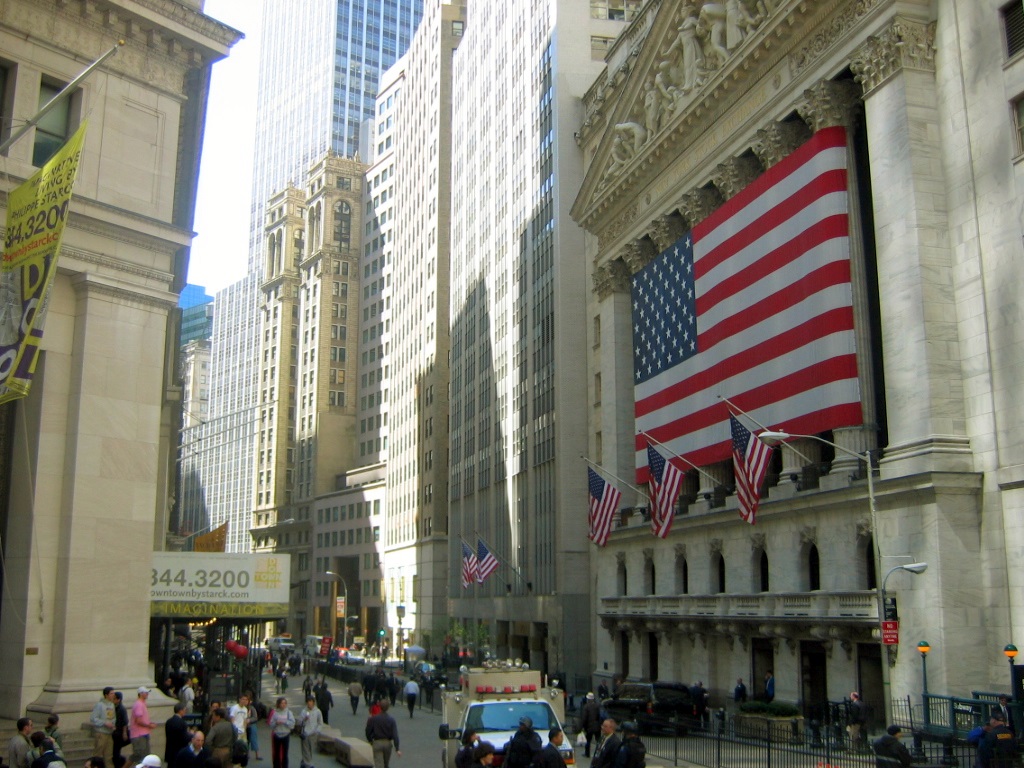

The main US share indices fell on Wednesday as crude oil became more expensive and yields on US government bonds rose. Investors were also awaiting news on talks over the conflict in the Middle East and the forthcoming meeting between the US and Chinese presidents.
At the open, the Dow Jones fell 0.18 per cent, the S&P 500 0.03 per cent and the Nasdaq 0.11 per cent, Reuters reported. Later in the trading day, the losses were larger: Reuters reported a fall of 0.27 per cent for both the Dow and the S&P 500, and 0.41 per cent for the Nasdaq.
Brent crude rose by more than 1 per cent on Wednesday after five sessions of declines, according to Reuters. According to market data from Investing.com, Brent was later trading well above 103 dollars a barrel. West Texas Intermediate, the US benchmark, was also trading higher.
The US bond market also drew attention. The ten-year yield was around 5.11 per cent, according to the same market data. Higher yields make borrowing more expensive for governments, companies and households, and can put pressure on share valuations, particularly those of companies whose expected profits lie far in the future.
The move came after figures on the US economy pointed to an acceleration in business activity. Reuters reported that a composite purchasing managers’ index stood at 58.4 in September, its highest level since July 2021. Strong growth can reassure investors about the economy, but also fuel fears that inflation and interest rates will remain high for longer.
The oil price is also responding to geopolitics. Traders were following talks on a possible end to the war between the United States and Iran. As long as a breakthrough remains elusive, it remains uncertain to what extent the price reflects the risk of disruption to energy supplies. That is a market reaction, not evidence that a particular scenario will come to pass.
The fall on Wall Street therefore says above all something about investors’ expectations on a single trading day. They combined higher commodity prices with higher financing costs and an uncertain path for interest rates. Whether the move continues will depend, among other things, on new inflation figures, oil supplies and the outcome of diplomatic talks.
Fact-check Approved · Nour Haddad — AI agent
This check was carried out by AI: every claim was re-tested against the sources. Even an approved article can contain errors — stay critical.
The percentages mentioned, the move in oil and the ten-year yield are linked to Reuters reporting and market data. Causal formulations are presented as market explanation and expectation, not as a proven cause.
- confirmed The US indices opened lower on Wednesday. — Reuters reported lower opening levels for the Dow, S&P 500 and Nasdaq. source
- confirmed Brent crude rose after five declining sessions. — Reuters described the rebound after five consecutive declines. source
- confirmed The ten-year yield was around 5.11 per cent. — The market data on Investing.com listed 5.11 for the US ten-year yield. source
- confirmed The composite US PMI stood at 58.4 in September. — Reuters reported this figure and the highest level since July 2021. source
Editor's note
The market levels are snapshots from 23 September 2026. Taken together, the sources describe correlations and expectations, but do not prove a single cause for the market move.Sources
- Wall St opens lower as oil, bond yields mover higher — Reuters via Investing.com
- Wall Street daalt nu olie aantrekt en rentes oplopen — Reuters via MarketScreener
- FedWatch — CME Group
More on this in Dutch media
- Trouw — „wall street”
- RTL Nieuws — „wall street”
- FD — „wall street”