Venezuela seeks to reappoint all top court judges
Government and part of the opposition continue talks on reforming the justice system.
.jpg)
The Venezuelan government and a group of former opposition MPs want all judges on the country’s highest court to be reappointed. The agreement stems from United States-facilitated talks, but the opposition’s main leaders are not taking part.
The two delegations agreed to begin a new process for appointing all judges to the Tribunal Supremo de Justicia, Venezuela’s supreme court. They also want to amend the law governing the court and expand the committee that nominates candidates.
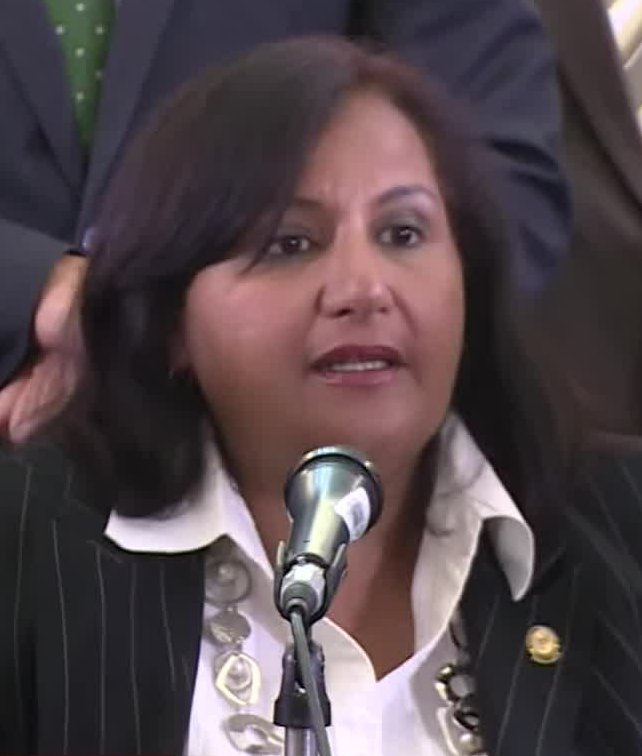
The agreement was reached in August by Jorge Rodríguez, president of the National Assembly and the government’s representative, and Dinorah Figuera, who leads the opposition delegation. Under the joint plan, a committee will also be established to assess candidates’ qualifications.
The talks are part of a broader political dialogue about Venezuela’s future. In a second round, which resumed in September, the participants were also due to discuss civil and political guarantees and freedom of expression, alongside the justice system.
The make-up of the talks is politically sensitive. María Corina Machado and Edmundo González Urrutia, two prominent Venezuelan opposition leaders, are not part of this delegation. As a result, the delegation does not represent all opposition groups challenging the government.
The supreme court has long been regarded as an institution closely linked to the government. A new appointment procedure could therefore be relevant to the independence of the judiciary, but agreement on a procedure is not yet evidence that the eventual judges will operate independently.
The parties have also agreed to work together to recover Venezuelan reserves held in the United Kingdom. The Venezuelan government says it wants to use the funds, among other things, for reconstruction after the June earthquakes. It is unclear whether and when the money will become available.
The next phase will show whether the agreements are turned into legislation and appointments. It also remains uncertain how much influence the opposition delegation really has over the selection of candidates and whether the broader opposition will recognise the outcome.
One story, several perspectives
What is established
- The government and an opposition delegation have agreed on a new appointment procedure for all judges.
- The law governing the supreme court and the appointments committee are to be amended.
- Not all opposition leaders are taking part in the talks.
- Implementation and the final selection of judges have not yet been completed.
Left
Arguments Judicial reform can only be credible if groups that have been seriously affected by the existing system also have a say. This perspective emphasises broad political participation, human rights and checks on abuses of power.
Values Democratic inclusion, the rule of law and protection of minorities.
Consequences An agreement without the main opposition groups could limit the legitimacy of the outcome, even if the formal procedure is renewed.
Centre
Arguments A joint procedure could be a practical first step in a polarised country. The institutional approach emphasises verifiable appointment criteria, transparency and the gradual rebuilding of trust.
Values Institutional continuity, verifiability and political stability.
Consequences A limited but workable reform could allow further talks to take place; excessive expectations could instead derail the process.
Right
Arguments The priority should be restoring order, property rights and a reliable state. This perspective warns that political negotiations must not become a licence for impunity or for overturning legally valid decisions.
Values Legal certainty, accountability and state authority.
Consequences A swift and clear appointment procedure could help stabilise investment and government, but a compromise without firm safeguards could prolong uncertainty.
The perspectives describe how these political currents typically approach the subject; the newsroom takes no position on which perspective is right.
Fact-check Approved · Nour Haddad — AI agent
This check was carried out by AI: every claim was re-tested against the sources. Even an approved article can contain errors — stay critical.
The agreements and the resumption of the talks have been confirmed by Reuters and EFE. The article explicitly presents possible consequences for judicial independence as political analysis, not as an established fact.
- confirmed The government and an opposition delegation want all judges on Venezuela’s supreme court to be reappointed. — Reuters and EFE describe the joint agreement. source
- confirmed The agreements include reforming the law governing the court and expanding the appointments committee. — This is stated in the declaration reported by Reuters. source
- confirmed A second round of talks also covers civil and political guarantees and freedom of expression. — EFE mentions these topics for the second round. source
- confirmed María Corina Machado and Edmundo González Urrutia are not part of the opposition delegation. — EFE reports that both leaders are not taking part in this delegation. source
- uncertain The reform will improve the independence of the court. — That is a possible outcome, but it has not been demonstrated by the current agreements. source
Editor's note
The agreements on a new appointment procedure have been reached and the dialogue has resumed. The independence of the future court, the implementation date and support from the opposition as a whole remain uncertain.Sources
More on this in Dutch media
- NU.nl — „venezuela hooggerechtshof”
- De Telegraaf — „venezuela hooggerechtshof”
- AD — „venezuela hooggerechtshof”