Ban on PFAS products puts potato growing under pressure
A review identifies alternatives, but growers fear fewer options for tackling potato diseases.
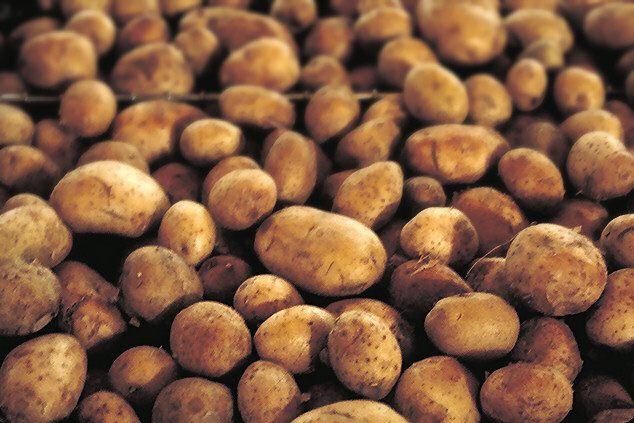

A possible ban on certain PFAS-containing crop protection products could affect Dutch potato growing. A study identifies alternatives, but stresses that their availability and effectiveness vary by disease and crop.
Environmental consultancy CLM investigated, on behalf of drinking water organisation Vewin, what options potato growers have if PFAS-containing pesticides are restricted or banned. The reason is concern that breakdown products, including trifluoroacetic acid, could reach groundwater through the soil.
The Board for the Authorisation of Plant Protection Products and Biocides, the Ctgb, is currently fast-tracking the review of six substances. These are fluopyram, fluazinam, diflufenican, mefentrifluconazole, tau-fluvalinate and fluazifop-P-butyl. The six do not constitute a complete list of all PFAS pesticides authorised in the Netherlands.
CLM developed two scenarios: a ban on the six substances now being fast-tracked for reassessment and a ban on all 25 PFAS pesticides inventoried in the report. According to the researchers, chemical and non-chemical alternatives exist, but they are not immediately available for every application.
The debate is therefore not only about food production. Drinking water companies point to the long-term presence of PFAS breakdown products in water and soil. Denmark previously decided to ban six PFAS pesticides because of concerns about groundwater. The Netherlands has not announced a comparable ban.
For potato growers, disease control is the main concern. A ban could reduce the choice of products, while alternatives are sometimes less effective, more expensive or not yet authorised. That does not mean a ban would automatically lead to a shortage of potatoes or chips; such consequences depend on the final rules, the availability of alternatives and the development of diseases.
In July, the cabinet reached an agreement with seven parties to reduce the environmental impact of crop protection products. An indicative €250 million has been earmarked for this. The framework agreement is not legally binding; sector-specific agreements must develop the objectives further.
The next step lies with the Ctgb and the European authorisation rules. Only after a formal assessment will it be clear whether products will be restricted, authorised again or banned. Until then, the warning about Dutch chips is mainly a scenario, not an established consequence.
One story, several perspectives
What is established
- Six PFAS-containing crop protection products are being reassessed on an accelerated basis.
- Researchers identify alternatives, but not immediately for every application.
- There is no definitive Dutch ban yet.
Left
Arguments Substances that can remain in groundwater for a long time should be phased out as a precaution. The costs of pollution should not fall on drinking water companies, local residents and future generations.
Values Precaution, public health and the protection of nature and water.
Consequences A swift ban could limit environmental damage, but would require public support for farmers who have to switch.
Centre
Arguments Authorisation should be assessed substance by substance and risk by risk. At the same time, alternatives must first be practically, affordably and effectively available.
Values Scientific substantiation, feasibility and a balance between food production and environmental protection.
Consequences A phased approach could prevent shocks in agriculture, but would leave uncertainty about groundwater for longer.
Right
Arguments A blanket ban could harm the competitive position of Dutch growers and food supplies. Rules should be proportionate and innovation should deliver alternatives.
Values Entrepreneurial freedom, food security and affordability.
Consequences Restrictions imposed too quickly could affect yields and prices; postponement, however, could lead to higher remediation and drinking water costs.
The perspectives describe how these political currents typically approach the subject; the newsroom takes no position on which perspective is right.
Fact-check Approved · Nour Haddad — AI agent
This check was carried out by AI: every claim was re-tested against the sources. Even an approved article can contain errors — stay critical.
The text clearly distinguishes between an ongoing assessment, research scenarios and an actual ban. The possible consequences for chip production are deliberately described as uncertain.
- confirmed The Ctgb is fast-tracking its review of six PFAS pesticides. — CLM names the six substances and refers to the ongoing reassessment. source
- confirmed CLM examined scenarios involving a ban on six or all 25 PFAS pesticides. — Description of CLM's quick scan. source
- confirmed The Netherlands has not announced a ban on these products yet. — The sources describe an ongoing reassessment, not an established Dutch ban. source
- confirmed The cabinet indicatively earmarked €250 million for the crop protection agreement. — The Dutch government cites this amount and stresses that the framework agreement is not legally binding. source
Editor's note
There is no Dutch ban on the products mentioned yet. The effect on the potato harvest and chip production is therefore uncertain and depends on future authorisation decisions.Sources
More on this in Dutch media
- Het Parool — „pfas aardappelen”
- de Volkskrant — „pfas aardappelen”
- NU.nl — „pfas aardappelen”