Debate over Schiphol centres on nuisance and room to grow
The Lower House (Tweede Kamer) discusses the new airport decision this evening, as parties clash over contraction, night flights and economic accessibility.
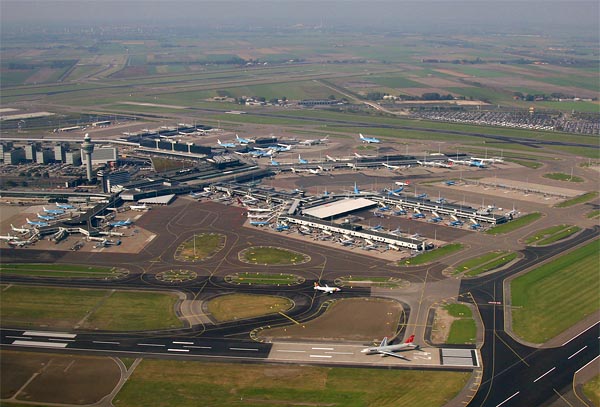

The Lower House debates the Schiphol Airport Traffic Decree 2026 on Tuesday evening. The government wants to reduce noise nuisance, but the draft would eventually once again leave room for growth.
The debate is scheduled from 18:30 to 23:00. The government wants the amended airport decision to take effect on 1 November 2026. It sets out, among other things, rules on runway use, noise limits and how future capacity can be allocated.
The political tension centres mainly on whether noise reductions may be used to enable new growth. Parliamentary documents refer to a growth path under which capacity could eventually rise to 500,000 flight movements. Opponents believe such a prospect has no place in the decision as long as its consequences for health, the climate and nature have not been convincingly substantiated.
The discussion follows criticism from the Netherlands Commission for Environmental Assessment and new research into the relationship between aircraft noise and nuisance. Parliamentary documents state that night flights in particular may cause more nuisance than older models assumed. The precise implications for the eventual number of affected local residents still have to be incorporated into the decision-making process.
Supporters of a stricter approach want to keep additional measures in reserve and have a night-time closure examined as a full-fledged scenario. Other parties are instead calling for attention to Schiphol’s hub function, the affordability of air tickets and the risk that travellers will switch to foreign airports.
Implementation also plays a role. Air Traffic Control the Netherlands has warned that the proposed limit-value system could lead to more changes between runways and possibly more flight movements over densely populated areas. The VVD therefore wants the government to demonstrate that the new system will not lead to additional nuisance in practice.
The legal history makes the debate particularly sensitive. In March, the Council of State annulled an earlier decision on a maximum of 478,000 flight movements because it had not been sufficiently explained how the number of flights would reduce noise nuisance. The government must now provide reasoning that is not only politically but also legally robust.
One story, several perspectives
What is established
- The Lower House is discussing an amended airport traffic decree for Schiphol.
- The draft includes the possibility of eventually increasing capacity to 500,000 flight movements.
- Parliamentary documents refer to concerns about noise nuisance, health, the climate and Schiphol’s economic function.
Left
Arguments Noise nuisance and the health of local residents must be paramount. Growth should not already be embedded in law as long as it has not been proven that the decision will genuinely reduce nuisance.
Values Health, living environment, climate responsibility and protecting citizens from economic concentrations of power.
Consequences A stricter capacity limit or night-time closure could affect airlines and travellers, but would give local residents clarity sooner and could structurally limit nuisance.
Centre
Arguments The decision must be legally robust and workable, with measurable noise targets, independent monitoring and scope for adjustment. Growth can only be considered once noise reductions have demonstrably been achieved.
Values Legal certainty, evidence, administrative feasibility and balancing interests.
Consequences A phased approach prevents abrupt economic damage, but may feel to local residents like postponement while the nuisance continues.
Right
Arguments Schiphol is important for trade, employment and international connections. Restrictions must be proportionate and prevent travellers and companies from switching to foreign airports.
Values Economic growth, accessibility, competitiveness and freedom of choice.
Consequences More room for flights supports the economy, but does require quieter aircraft, better routes and checks on the actual noise burden.
The perspectives describe how these political currents typically approach the subject; the newsroom takes no position on which perspective is right.
Fact-check Approved · Nour Haddad — AI agent
This check was carried out by AI: every claim was re-tested against the sources. Even an approved article can contain errors — stay critical.
The main facts can be found in the parliamentary agenda, parliamentary documents, government information and reporting on the Council of State’s ruling. Political positions have been attributed as positions.
- confirmed The Lower House is debating the Schiphol Airport Traffic Decree on 29 September 2026. — Listed on the official parliamentary agenda. source
- confirmed The government wants the amended decision to take effect on 1 November 2026. — Mentioned in the parliamentary documents. source
- confirmed The Council of State previously annulled the decision on a maximum of 478,000 flight movements. — Reported by NOS on the basis of the ruling. source
Editor's note
It is established that the Lower House will debate the issue on Tuesday and that the government wants the Airport Traffic Decree to take effect on 1 November. The precise outcome and any motions were not yet known at 07:11.Sources
- Agenda van 29 september 2026 — Tweede Kamer
- Kamerstukken over Schiphol en het LVB 2026 — Tweede Kamer
- Raad van State vernietigt besluit over maximum aantal vluchten Schiphol — NOS
- Kabinet kiest voor nieuwe aanpak geluidsoverlast Schiphol — Rijksoverheid
More on this in Dutch media
- RTL Nieuws — „schiphol geluidsoverlast”
- NOS — „schiphol geluidsoverlast”
- Het Parool — „schiphol geluidsoverlast”