German patient no longer needs blood transfusions after CRISPR therapy
A 19-year-old with beta thalassaemia has received an approved CRISPR treatment in Germany for the first time outside a study.
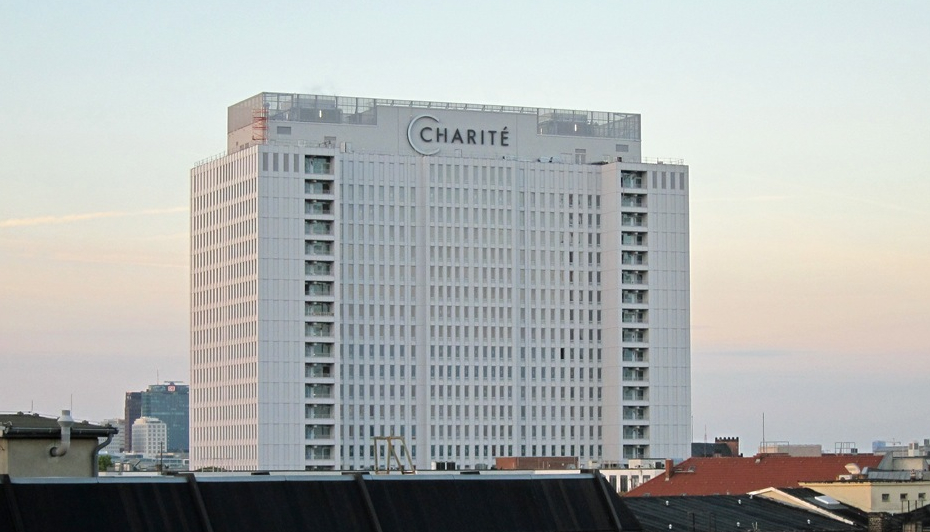

A 19-year-old patient with severe beta thalassaemia no longer needs regular blood transfusions after CRISPR-based gene therapy at Berlin's Charité. It is the first use in Germany outside a clinical study of this approved treatment.
The patient, Mohammad, received his own blood-forming stem cells back in May after they had been modified with CRISPR. Four months later, his body was producing sufficient haemoglobin, according to Charité, and he was no longer dependent on the transfusions he had regularly needed since childhood.
The treatment uses exagamglogene autotemcel, known as exa-cel for short. The therapy switches a genetic pathway back on in blood-forming stem cells, enabling them to produce more foetal haemoglobin. This type of haemoglobin can carry oxygen and largely declines after birth in healthy people.
The treatment in Germany is possible because exa-cel has been authorised in Europe under certain conditions for specific patients with transfusion-dependent beta thalassaemia or severe sickle-cell disease. The treatment is intensive: stem cells are first collected, modified outside the body and returned after preparatory chemotherapy.
The outcome for Mohammad is encouraging, but it is not proof that every patient will respond in the same way. Charité cites possible side effects of the preparatory treatment and points out that long-term data on safety and efficacy are still lacking. Patients must therefore be followed for fifteen years.
The development does show that CRISPR is no longer solely a laboratory technique. A therapy arising from research into a molecular pair of scissors is now being used under certain conditions in routine healthcare. The treatment remains limited to specialised centres and patients who meet the medical eligibility criteria.
Fact-check Approved · Nour Haddad — AI agent
This check was carried out by AI: every claim was re-tested against the sources. Even an approved article can contain errors — stay critical.
The clinical application, the treatment of one patient and the absence of transfusions have been confirmed by multiple independent sources. The text notes the limited follow-up and possible risks, so the outcome is not presented as a general cure.
- confirmed A 19-year-old in Germany received exa-cel outside a clinical study. — Charité, Deutschlandfunk and Ärzteblatt describe this first routine application. source
- confirmed The patient no longer needed blood transfusions four months after treatment. — This was reported by Charité and picked up by Deutschlandfunk. source
- confirmed Patients must be followed for fifteen years. — Charité cites the fifteen-year follow-up as part of the conditional authorisation. source
- confirmed Long-term data on safety and efficacy are still lacking. — The treating clinic explicitly states that long-term data are not yet available. source
Editor's note
The first routine application in Germany and the absence of transfusions were reported by Charité and confirmed by Deutschlandfunk and Ärzteblatt. It concerns one patient; long-term safety and broader efficacy have not yet been established.Sources
- A first in Germany: Charité successfully treats 19-year-old with CRISPR therapy — Charité – Universitätsmedizin Berlin
- Crispr/Cas: Erstmals Patient in Deutschland mit Genschere behandelt — Deutschlandfunk
- Genschere CRISPR: Erste reguläre Behandlung von Patient in Deutschland — Deutsches Ärzteblatt
More on this in Dutch media
- NOS — „crispr gentherapie”
- Het Parool — „crispr gentherapie”
- Trouw — „crispr gentherapie”