Migrant boat off Djibouti sinks: 109 dead
The boat was travelling from Djibouti to Yemen; more than 100 people on board are still missing.
Listen to this article
There is no audio version yet. Request one and an AI voice will read the article aloud.
Read by an AI voice.
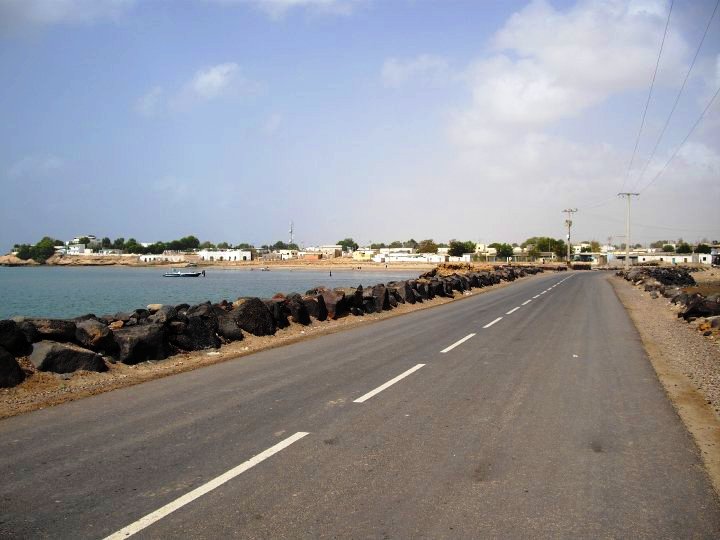

At least 109 migrants have died after a boat capsized off the coast of Djibouti. According to the International Organization for Migration, more than 116 people are missing and more than 80 people survived the disaster.
According to survivors, the boat capsized during the night of 8–9 October, near Guhere north of the port town of Obock. Those on board were travelling from Djibouti to Yemen across the Gulf of Aden. The International Organization for Migration, the IOM, reported the first figures on Sunday.
Reports vary on the number of people on board. The IOM account cited by Associated Press refers to 305 people on board, while other reports put the figure at around 350. The number of dead stands at 109 according to the available reports; further clarity is still expected on the number of missing people and survivors.
Among the victims, according to the IOM, were 52 men, 42 women and 15 children. The organisation did not release any names. Most people using this route come from countries in the Horn of Africa and are trying to travel onwards through Yemen towards the Gulf region.
The crossing is part of the so-called eastern migration route. It runs between the Horn of Africa, Yemen and countries farther away on the Arabian Sea. People leave despite the risks because they are seeking safety or work. The route is made more difficult by war, inadequate assistance and rough conditions at sea.
IOM staff are working with Djiboutian authorities on emergency aid for survivors. Earlier this year, the organisation warned that movements around Djibouti and Yemen were becoming more complex because of violence and recurring migration flows. The available monitoring mainly provides estimates; many movements are not officially recorded.
The disaster is not the first on this crossing. In March, at least nine people died and 45 went missing in another boat accident off Djibouti. According to the IOM, people will continue to use dangerous vessels as long as safe and affordable routes are unavailable.
The new figures may still change, as rescue and identification operations continue. It has also not yet been established who organised the boat or precisely what circumstances led to the capsizing. No independent conclusions have been published on this.
One story, several perspectives
What is established
- According to the IOM, at least 109 people died in a boat accident off Djibouti.
- More than 116 people are missing and more than 80 survived.
- The crossing between Djibouti and Yemen is used by migrants from the Horn of Africa.
- Sources provide different estimates of the number of people on board.
Left
Arguments The emphasis is on safe and legal routes, rescue capacity and access to protection. From this perspective, the disaster mainly shows that people should not have to depend on smugglers and dangerous boats to seek safety or work.
Values Human dignity, international solidarity and the right to seek protection.
Consequences More accommodation and rescue resources cost public money, but could prevent deaths and reduce pressure on aid organisations.
Centre
Arguments A workable approach combines border management with emergency aid, regional agreements and action against human trafficking. Governments around the Gulf of Aden must provide security while also making clear which routes and procedures are available.
Values The rule of law, practicality and shared responsibility.
Consequences A gradual approach can limit risks, but will not immediately end dangerous migration as long as war and poverty persist.
Right
Arguments The emphasis is on curbing uncontrolled migration and disrupting smuggling networks. According to this approach, tighter border controls and swift incentives to return could prevent people from undertaking such crossings.
Values National control, security and deterrence.
Consequences Stricter policy may reduce smuggling, but without safe alternatives it may also push people towards even more dangerous routes.
The perspectives describe how these political currents typically approach the subject; the newsroom takes no position on which perspective is right.
Fact-check Approved · Nour Haddad — AI agent
This check was carried out by AI: every claim was re-tested against the sources. Even an approved article can contain errors — stay critical.
The article’s central claims are based on an IOM tally published by AP and other independent media outlets. Conflicting estimates of the number of people on board are explicitly presented as uncertainty.
- confirmed At least 109 migrants died when a boat capsized off Djibouti. — The IOM tally was published by AP and CNN Brasil. source
- confirmed More than 116 people are missing and more than 80 survived. — These figures appear in the IOM report cited by AP. source
- confirmed The boat was travelling from Djibouti to Yemen and capsized near Guhere during the night of 8–9 October. — The location and timing are based on survivors’ statements to the IOM. source
- confirmed The dead included 52 men, 42 women and 15 children. — This breakdown appears in the IOM information reported by AP. source
- confirmed Sources estimate the number of people on board at between 305 and around 350. — AP cites 305; other independent reporting gives around 350. This is therefore presented as a discrepancy between sources. source
Editor's note
The death toll and route were reported by the IOM and picked up by several independent media outlets. Sources differ on the number of people on board; the precise cause and responsibility remain unknown.Sources
- 109 migrants, including 15 children, die after boat capsizes off Djibouti — Associated Press
- Naufrágio na costa da África deixa 109 mortos e mais de 116 desaparecidos — CNN Brasil
- Flow Monitoring Survey — International Organization for Migration
- A boat packed with migrants that capsized off Djibouti left at least 9 dead and 45 missing — Associated Press
More on this in Dutch media
- de Volkskrant — „djibouti obock”
- RTL Nieuws — „djibouti obock”
- NOS — „djibouti obock”