Indian protest over electoral rolls reaches Supreme Court
Opposition and youth movement demand inquiry into removal of millions of names.
Listen to this article
There is no audio version yet. Request one and an AI voice will read the article aloud.
Read by an AI voice.
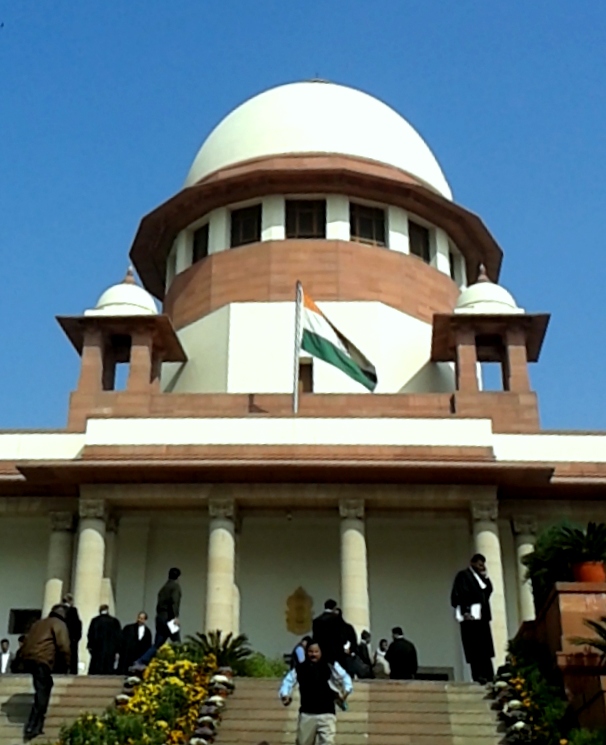

Hundreds of opposition protesters and supporters of the youth movement Cockroach marched to the Supreme Court in New Delhi on Monday. They filed a petition against the large-scale revision of the electoral rolls and demanded the departure of Chief Election Commissioner Gyanesh Kumar.
The demonstrators say the revision could exclude eligible voters who do in fact have the right to vote. According to reports by AP and Reuters, more than 130 million names have been removed from draft electoral rolls since the operation began. The authorities say these include deceased people, voters who have moved and people who could not be traced.
The opposition does not dispute that electoral rolls need to be updated, but it does dispute the way this is being done. Parties and the Cockroach Janta Party say citizens are being given too little time or too few opportunities to have their names added again. This could particularly create problems for people without old identity or address documents.
The Election Commission and the government of Prime Minister Narendra Modi deny that the operation is politically motivated. They present the Special Intensive Revision as an administrative clean-up intended to remove duplicate, deceased and ineligible entries. According to the commission, people whose names are missing can object or submit a request for inclusion.
The demonstration follows a weekend during which police detained thousands of activists, according to AP. Leaders of the youth movement were released again on Sunday and announced that they would continue protesting. Roads were closed in central New Delhi, and Jantar Mantar, a well-known protest site, was temporarily replaced by three other designated locations.
The case has consequently developed along two tracks. On the streets, it concerns access to the electoral roll and the space to demonstrate; at the Supreme Court, it concerns whether the Election Commission is carrying out the procedure with sufficient care and accountability. The demonstrators are asking not only for names to be restored, but also for oversight of the commission’s working methods.
The legal outcome is not yet known. Nor is it established how many of the deleted names belonged to people who were actually eligible to vote. It is clear, however, that the electoral rolls have become a central political battleground in India, where the opposition is directly linking the reliability of the electoral process to Modi’s government.
One story, several perspectives
What is established
- Opposition parties and a youth movement protested on Monday against the revision of the electoral rolls.
- The Election Commission and the government say the operation is administrative and not politically motivated.
- More than 130 million names have been removed from draft rolls, according to AP and Reuters.
- The Supreme Court has not yet issued a ruling on the substance of the case.
Left
Arguments An electoral-roll operation of this scale must first demonstrate that it does not exclude legitimate voters. Without accessible objection procedures and independent oversight, administrative clean-up can turn into political exclusion.
Values Equal political participation, civil rights and protection of vulnerable groups.
Consequences A flawed procedure can damage trust in elections and cost mainly poor, mobile or document-poor citizens their vote.
Centre
Arguments Electoral rolls must be reliable, but every deletion must be verifiable, temporarily reversible and reviewable by an independent court. The solution lies in transparent criteria and sufficient time for objections.
Values Institutional reliability, legal certainty and administrative diligence.
Consequences A careful procedure takes time, but prevents a necessary administrative operation from itself causing a constitutional crisis.
Right
Arguments An election loses credibility if deceased, duplicate or ineligible entries remain. The Election Commission must be able to carry out its legal duty without every correction being seen as a partisan attack.
Values Orderly government, electoral integrity and enforcement of legal conditions.
Consequences Too much political pressure on the commission can lead to disorderly electoral rolls and disputed results; objections should be dealt with through existing procedures.
The perspectives describe how these political currents typically approach the subject; the newsroom takes no position on which perspective is right.
Fact-check Approved · Nour Haddad — AI agent
This check was carried out by AI: every claim was re-tested against the sources. Even an approved article can contain errors — stay critical.
The core facts about the demonstration, the electoral rolls and the authorities’ response are supported by AP, Reuters and official Indian sources. The text attributes disputed interpretations to the opposition and the government and does not rule on their ultimate accuracy.
- confirmed Opposition protesters marched to the Indian Supreme Court on 12 October. — Reported by AP and Reuters. source
- confirmed More than 130 million names have been removed from draft electoral rolls. — The figure is cited by AP and Reuters; the status of individual names is disputed. source
- confirmed The Election Commission says the revision is intended to remove duplicate, deceased and untraceable entries. — This is the explanation AP and official Indian information give for the operation. source
- confirmed Thousands of demonstrators were detained over the weekend. — Reported by AP and Reuters. source
- confirmed The legal outcome of the petition is not yet known. — The sources consulted report the filing but no ruling. source
Editor's note
The demonstration and the appearance before the Supreme Court were reported on Monday by AP and Reuters. The number of deleted names is cited by multiple sources, but its significance and the question of how many people were wrongly excluded are the subject of political and legal dispute.Sources
- India’s opposition parties march to top court as protests over voter lists escalate — Associated Press
- India opposition parties march to Supreme Court against election chief — Reuters via Investing.com
- Press Release Page over de Special Intensive Revision — Press Information Bureau India
More on this in Dutch media
- De Telegraaf — „india new delhi”
- AD — „india new delhi”
- de Volkskrant — „india new delhi”