Saudi Arabia halts warnings of new attacks
Reuters says there were no public warnings for days as airports in Riyadh came under attack again.
There is news on this story (Tuesday, 13 October 2026, 02:56): Qatar Airways suspends flights to Riyadh and Dammam
Follow-up to: Saudi Arabia investigates failed defences after airport attack Monday, 12 October 2026, 19:58
Listen to this article
There is no audio version yet. Request one and an AI voice will read the article aloud.
Read by an AI voice.
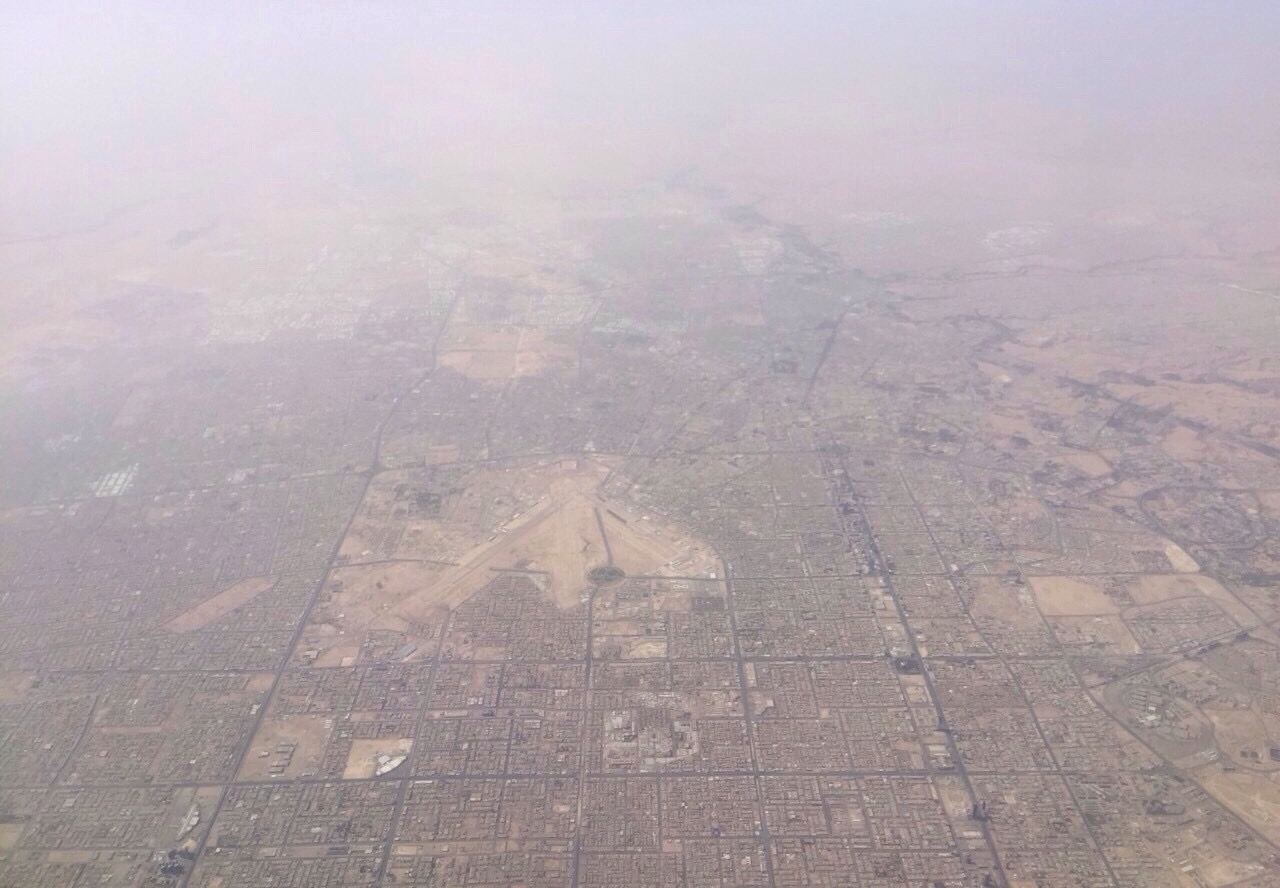

Saudi Arabia stopped issuing public warnings about incoming missiles and drones several days before a series of attacks. The government has not explained why, while the silence raises fresh questions about the protection of residents and travellers.
Reuters reported on Tuesday that Saudi Arabia’s warning system fell silent before several attacks on airports in Riyadh. According to the news agency, at least 18 people were killed and more than 300 injured in the series of attacks. The Saudi government has not publicly confirmed that total.
The last warning before the recent attacks was reportedly sent on 29 September for the southern province of Najran. It was not until Monday that warnings were issued again for Riyadh and other southern cities. Reuters could not establish whether the resumption was directly connected to the attacks.
Two officials familiar with discussions between a friendly Western government and Saudi Arabia told Reuters that the warnings caused too much disruption. Citizens reportedly complained that they were woken by them at night. Saudi authorities have not confirmed that explanation and, according to Reuters, did not respond to questions.
The absence of public warnings stood out all the more because foreign embassies in Riyadh, according to people familiar with the matter, did send their own alerts to staff. Those warnings were based on intelligence from Western governments and information from Saudi authorities. According to Reuters, the embassies also received no internal warning before Saturday’s deadly attack.
The issue comes on top of an investigation into the failure of the air defences. According to The Associated Press, Saudi Arabia has been investigating since Monday why missiles and drones were able to reach King Khalid Airport in Riyadh. Regional officials, who remained anonymous because they were not authorised to speak publicly, said the attack involved several types of projectile.
There are differences between the sources over the casualties. AP reported at least 13 people killed and more than 300 injured in Saturday’s attack; Reuters counted at least 18 deaths across the entire series. Both news agencies reported that the airport remained temporarily closed. The Saudi aviation authority also reported that Dammam airport was targeted on Sunday and that security checks were carried out.
Saudi Arabia and its allies attribute the attacks to the Houthis in Yemen, who are waging parts of the regional war around airports and oil infrastructure. Exactly who was responsible for each individual incident has not been independently established. The new information about the warnings chiefly makes clear that Riyadh is simultaneously trying to protect the public and project an image of administrative control and economic continuity.
One story, several perspectives
What is established
- Saudi Arabia issued no public warnings about incoming attacks for several days.
- According to anonymous officials, disruption was a possible reason; the government did not confirm this.
- Saudi Arabia is also investigating the performance of its air defences.
Left
Arguments Public warnings should primarily protect the population. A government should not give greater weight to economic calm or its reputation than to timely information that enables people to get themselves to safety.
Values Transparency, public responsibility and the protection of civilians.
Consequences More warnings may cause unrest and disruption, but withholding information can further damage trust in the government and confidence in safety over the long term.
Centre
Arguments The government must use warnings reliably and proportionately. A system that raises the alarm constantly loses credibility, but deviations from normal procedure do require explanation and independent evaluation.
Values Proportionality, institutional diligence and trust in public systems.
Consequences A combination of targeted mobile alerts, clear risk levels and transparent accountability afterwards could limit both panic and information gaps.
Right
Arguments In wartime, the state must retain room for manoeuvre to protect military information and social stability. Too many public alerts can help enemies, paralyse economic activity and make citizens insensitive to genuine alarms.
Values National security, order and administrative effectiveness.
Consequences Less public information may support the continuity of aviation and the economy, but increases political responsibility when civilians are hit without warning.
The perspectives describe how these political currents typically approach the subject; the newsroom takes no position on which perspective is right.
Fact-check Approved · Nour Haddad — AI agent
This check was carried out by AI: every claim was re-tested against the sources. Even an approved article can contain errors — stay critical.
The article’s core is based on recent reporting by Reuters and AP. Unconfirmed explanations and differing casualty figures are explicitly attributed and qualified.
- confirmed Saudi Arabia stopped issuing public warnings days before a series of attacks. — Reuters reports that no public warnings were issued before the attacks. source
- confirmed The last warning before the attacks dated from 29 September. — Reuters refers to reports by Saudi civil defence. source
- confirmed Warnings for Riyadh and southern cities were issued again on Monday. — Reuters describes the first new alerts since 29 September. source
- uncertain Officials said the warnings caused too much disruption. — This is an unofficially attributed explanation from two insiders; the Saudi government did not confirm it. source
- confirmed Saudi Arabia is investigating why its air defences did not prevent the attack on Riyadh. — AP reports an investigation based on two regional officials. source
- confirmed AP reported at least 13 people killed and more than 300 injured in Saturday’s attack. — This is the figure given by AP for the individual attack. source
- confirmed Reuters reported at least 18 people killed and more than 300 injured in the series of attacks. — Reuters gives this as the total for the series; the difference from AP is noted in the text. source
- confirmed Dammam airport was targeted in an attack on 11 October. — This appears in a report by the Saudi aviation authority via SPA. source
- confirmed Saudi Arabia and its allies hold the Houthis responsible for the attacks. — AP and Reuters describe the attacks in the context of Houthi attacks; the text does not claim that every incident has been independently established. source
Editor's note
It is certain that Reuters reported the absence and resumption of public warnings and that AP described a Saudi investigation into the air defences. The alleged reason for stopping the alerts comes from anonymous officials and has not been confirmed by the Saudi government; casualty figures differ between sources.Sources
- Saudi warning system stayed silent before deadly airport attacks — Reuters via MarketScreener
- Saudis probe how defense systems failed to stop deadly Houthi attack on Riyadh airport — Associated Press
- GACA: Attack Targets King Fahd International Airport in Dammam — Saudi Press Agency
The story so far
- Friday, 9 October 2026, 13:42 Houthi attacks on Riyadh airport kill three
- Saturday, 10 October 2026, 05:43 Saudi Arabia launches offensive against Houthis
- Saturday, 10 October 2026, 18:48 Riyadh Airport attacked again, flights cancelled
- Saturday, 10 October 2026, 23:45 More wounded in attack on Riyadh airport
- Sunday, 11 October 2026, 05:44 New attack on Riyadh airport claims twelve lives
- Sunday, 11 October 2026, 12:46 Riyadh keeps airport closed after deadly attack
- Sunday, 11 October 2026, 15:58 Report: child killed after Saudi strike on Sanaa
- Sunday, 11 October 2026, 16:28 Trump considers US role in Saudi attacks
- Sunday, 11 October 2026, 18:04 Projectile hits passenger terminal in Riyadh again
- Sunday, 11 October 2026, 21:27 A projectile also lands near Dammam airport
- Sunday, 11 October 2026, 23:27 Fresh attacks on Saudi Arabia raise risk of regional war
- Monday, 12 October 2026, 01:26 New attack on Riyadh airport kills one
- Monday, 12 October 2026, 02:26 New attack also hits Dammam airport
- Monday, 12 October 2026, 19:58 Saudi Arabia investigates failed defences after airport attack
- Tuesday, 13 October 2026, 02:26 Saudi Arabia halts warnings of new attacks (this article)
- Tuesday, 13 October 2026, 02:56 Qatar Airways suspends flights to Riyadh and Dammam
More on this in Dutch media
- De Telegraaf — „saoedi-arabië riyad”
- AD — „saoedi-arabië riyad”
- de Volkskrant — „saoedi-arabië riyad”