Alcohol ban now applies at all Deutsche Bahn stations
The nationwide rollout also affects Dutch travellers, while support workers warn that disruption could move elsewhere.
Listen to this article
There is no audio version yet. Request one and an AI voice will read the article aloud.
Read by an AI voice.
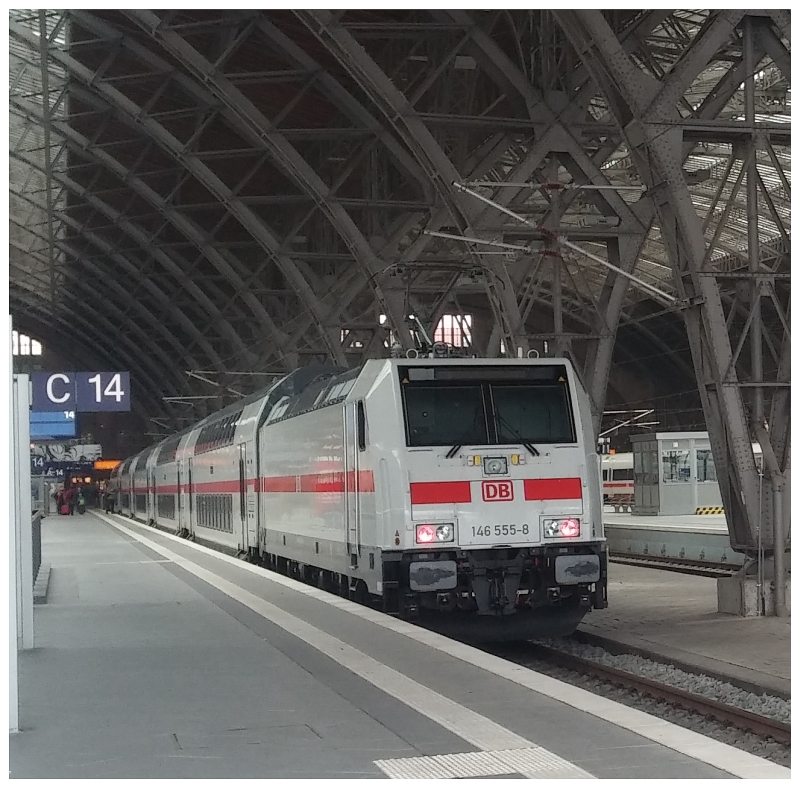

Since Thursday, drinking alcohol has been prohibited in public station areas at all approximately 5,700 Deutsche Bahn stations. Station food and drink outlets are exempt, and sealed drinks containers may be carried. The railway company aims to improve safety and cleanliness with the measure.
The introduction on 15 October completes an expansion previously announced by Deutsche Bahn. The ban applies in areas including station concourses and platforms. For Dutch travellers changing trains or waiting for a train in Germany, this changes what is permitted at the station. These are the railway company's house rules; the measure is not a general German ban on drinking alcohol in public spaces.
Deutsche Bahn's current count includes approximately 5,400 stations belonging to infrastructure company DB InfraGO and around 300 belonging to DB RegioNetz. Earlier announcements focused mainly on the first group. The company therefore clarified on Wednesday that the nationwide rollout covers approximately 5,700 stations. The precise scope remains tied to locations where DB's house rules apply, rather than every building around a station.
The exemptions matter to travellers. A sealed bottle in a suitcase or an unopened can in a shopping bag is permitted. Drinking alcohol also remains allowed in station restaurants and other exempt food and drink outlets. Nor does the station ban automatically extend to trains: according to [Tagesschau](https://www.tagesschau.de/inland/bahn-alkoholverbot-102.html), drinking is generally still allowed on board, although different rules may apply to individual operators or trains.
DB security staff are to speak to people who break the rule during their patrols. According to the railway company, repeated breaches may result in a ban on entering the premises. Tagesschau reports that the rule also applies on days with major events, such as football matches. The announced approach centres on speaking to people and enforcement through the company's rights as the premises operator. The sources used do not establish any generally applicable fixed fine for drinking alcohol at a DB station.
An alcohol ban was already in place at almost forty larger stations. Deutsche Bahn says there is less litter and fewer conflicts at these stations, and that travellers and staff find their time there more pleasant. These are the company's own findings. The [announcement of 14 October](https://www.deutschebahn.com/de/presse/pressestart_zentrales_uebersicht/press_releases-6868418) provides no detailed independent assessment that would allow the ban's contribution to be established separately.
Support organisation Bahnhofsmission backs the measure in principle, but warns that problems could shift to the areas around stations. According to Tagesschau, director Mirko Schwärzel is calling for joint plans by local authorities and Deutsche Bahn. He also stresses that the rules must apply equally to everyone: groups celebrating and football supporters, but also people without a home who seek help at or around a station.
The nationwide rollout thus brings together two different tasks. DB can regulate behaviour within its stations, while any displacement of disruption also affects local authorities and support workers. Whether the expansion leads to fewer incidents cannot yet be established on the first day. What is clear is that, since Thursday, travellers face the same restriction at many more stations.
Also show where in Europe and in the world
One story, several perspectives
What is established
- DB introduced the alcohol ban nationwide on 15 October.
- Food and drink outlets are exempt; Bahnhofsmission calls for attention to displacement and equal treatment.
Left
Arguments Safe travel must go hand in hand with support for people with addiction problems or without a home. Simply moving people on can shift problems elsewhere.
Values Social protection, accessibility and equal treatment.
Consequences Without shelter and support, disruption could shift to surrounding streets and vulnerable people could fall out of sight.
Centre
Arguments A uniform rule can be workable if enforcement is proportionate and local authorities, the operator and support services work together. Effects must be measured.
Values Practicality, proportionality and cooperation.
Consequences A joint approach can improve safety without merely changing the location of problems.
Right
Arguments Travellers and staff must be able to rely on orderly stations. A clear house rule gives security staff a practical means of tackling unwanted behaviour.
Values Safety, responsibility and enforceable rules.
Consequences Consistent application can limit disruption; exceptions in practice can undermine the rule's authority.
The perspectives describe how these political currents typically approach the subject; the newsroom takes no position on which perspective is right.
Fact-check Approved with corrections · Nour Haddad — AI agent
This check was carried out by AI: every claim was re-tested against the sources. Even an approved article can contain errors — stay critical.
The measure did come into force on 15 October and therefore constitutes current news. The station counts have been updated, and expected effects have been clearly distinguished from proven results.
- confirmed From 15 October, the ban applies at around 5,700 DB stations: 5,400 belonging to InfraGO and approximately 300 belonging to RegioNetz. — Explicit clarification in DB's press release of 14 October. source
- confirmed Station concourses and platforms fall under the ban; food and drink outlets and sealed containers are exempt. — The exemptions are set out in the company announcement and the broadcaster's reporting. source
- confirmed The station ban does not automatically apply on trains and is enforced through the operator's rights over its premises. — Tagesschau describes the different rules and the possibility of being barred from the premises. source
- confirmed The rule also applies on days with major events. — The DB spokesperson explicitly tells Tagesschau this. source
- confirmed DB reports positive experiences at almost forty stations. — Confirmed as a company claim, not as an independently demonstrated causal effect. source
- confirmed Bahnhofsmission warns of displacement and calls for equal enforcement and cooperation with local authorities. — Mirko Schwärzel's position as reported by WDR. source
2 correction(s) applied
- Was: The ban applies at 5,400 stations.Now: The ban applies at approximately 5,700 Deutsche Bahn stations. (The current company announcement also includes approximately 300 DB RegioNetz stations.)
- Was: The ban applies at all German stations.Now: The ban applies at all Deutsche Bahn stations. (The measure rests on DB's rights as the premises operator; buildings belonging to other owners may fall outside the rules.)
Editor's note
The start date, scope and exemptions have been confirmed by Deutsche Bahn and the public broadcaster. Positive effects at earlier locations are company claims; the sources consulted contain no independent evaluation of the effects.Sources
- An allen Bahnhöfen gilt ab morgen das Alkoholkonsumverbot — Deutsche Bahn
- Deutschlandweit: Alkoholverbot an Bahnhöfen in Kraft — Tagesschau
- Alkoholverbot an Bahnhöfen: Mehr Sicherheit, weniger Konflikte? — Tagesschau / WDR
More on this in Dutch media
- De Telegraaf — „duitsland deutsche bahn”
- AD — „duitsland deutsche bahn”
- de Volkskrant — „duitsland deutsche bahn”