Iranian student sentenced to death over online post
Human rights organisations report that a 23-year-old woman was convicted of allegedly insulting the prophet; an appeal remains possible.
Listen to this article
There is no audio version yet. Request one and an AI voice will read the article aloud.
Read by an AI voice.
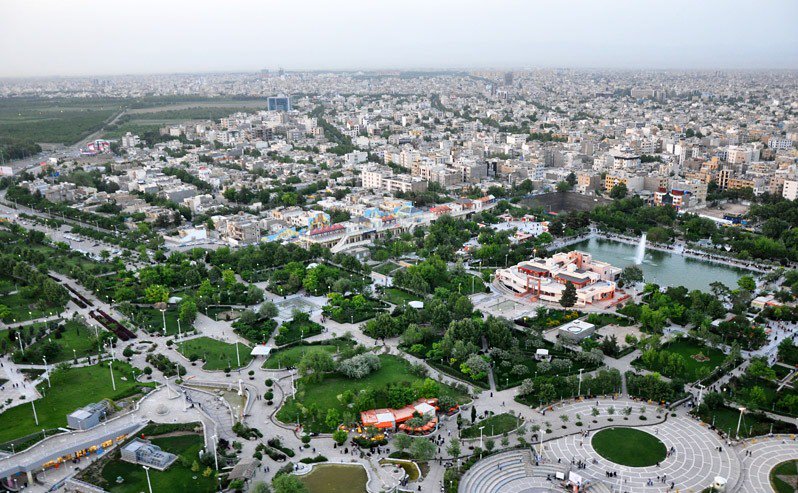

Iranian student Najmeh A. has reportedly been sentenced to death for a social media post, according to human rights organisations. The conviction is not final and the post’s exact content has not been made public.
Human rights organisations and international media reported the case on Wednesday. According to Humanists UK, she is a 23-year-old accountancy student. The Guardian writes that she is being held in Mashhad and has also received a prison sentence of more than twelve years in separate cases.
A source claiming to be close to the family told Human Rights Activists in Iran that the death sentence was imposed for ‘sab ol-nabi’, a charge used in Iran for insulting the prophet. The precise text of the post for which Najmeh A. was convicted has not been made public.
The Guardian reports that, according to the accounts, she was arrested after online surveillance by Iran’s cyber police. She was also reportedly convicted of, among other things, acting against national security and propaganda against the regime. These details come from sources connected to the case and have not been independently confirmed in a publication by an Iranian court.
The death sentence can still be challenged before Iran’s Supreme Court. This means the case has not yet been legally concluded. It is also unclear whether the authorities have publicly confirmed the conviction; public reporting has mainly come from human rights organisations and media outside Iran.
The case comes against the backdrop of a broader increase in executions and death sentences in Iran. Amnesty International reported that between 30 September and 5 October, five people were executed following convictions connected to protests in January. Amnesty says that, in those cases, the right to legal representation and a fair trial were among the issues at stake.
Human rights organisations see Najmeh A.’s case as part of a pattern in which online expression, protests and criticism of the government are punished severely. The Iranian authorities generally present comparable cases as enforcement of national security and religious law. In this specific case, no fully public file is yet available with which to assess those interpretations independently.
One story, several perspectives
What is established
- Human rights organisations report a death sentence against a 23-year-old Iranian student.
- The conviction is reportedly connected to a social media post and remains open to appeal.
- The post’s exact content and the full judgment are not publicly available.
- Amnesty International reported five executions connected to protests during the same period.
Left
Arguments This approach emphasises that freedom of expression and a fair trial should apply even in religiously and politically sensitive cases. A death sentence for online expression is seen as disproportionate and as a means of deterring criticism.
Values Human rights, individual freedom and protection from state power.
Consequences According to this view, international pressure, sanctions and diplomatic isolation may be necessary to have the conviction reviewed and prevent further executions.
Centre
Arguments The institutional approach calls for independent verification of the judgment, access to legal representation and a transparent appeal process. At the same time, a distinction must be made between confirmed facts, reports from human rights organisations and official Iranian statements.
Values The rule of law, procedural diligence and diplomatic effectiveness.
Consequences Targeted pressure and international monitoring could influence the legal process without closing all diplomatic channels with Iran.
Right
Arguments A right-oriented interpretation places greater emphasis on Iran’s authority to enforce religious and national security rules within its own legal order. Even from that position, it can be argued that the death sentence and a closed trial undermine the legitimacy of that legal order.
Values National sovereignty, public order and social cohesion.
Consequences A strong foreign condemnation could be used in Iran as evidence of foreign interference, while leniency could signal that serious human rights violations carry no consequences.
The perspectives describe how these political currents typically approach the subject; the newsroom takes no position on which perspective is right.
Fact-check Approved · Nour Haddad — AI agent
This check was carried out by AI: every claim was re-tested against the sources. Even an approved article can contain errors — stay critical.
The core report was published by The Guardian and Humanists UK within the past 48 hours, and Amnesty confirms the broader context of political executions. The text explicitly states which elements have not been independently or officially confirmed.
- confirmed According to human rights organisations, Najmeh A. was sentenced to death for a social media post. — Reported by The Guardian and Humanists UK; the sources refer to human rights organisations and family contacts. source
- confirmed The death sentence is not yet final and an appeal before Iran’s Supreme Court is possible. — The Guardian states this explicitly. source
- confirmed Najmeh A. also received a prison sentence of more than twelve years. — The Guardian mentions a separate sentence of twelve years, six months and one day. source
- confirmed The exact content of the social media post is not public. — The Guardian writes that the content has not been made public. source
- confirmed Amnesty International reported five executions in Iran between 30 September and 5 October 2026. — Amnesty names these five cases and the relevant period. source
Editor's note
The report of the death sentence and the possibility of an appeal have been reported by multiple public sources. The Iranian authorities have not published a fully public judgment in the sources consulted; details about the charge and evidence have therefore been attributed.Sources
More on this in Dutch media
- Het Parool — „iran doodstraf”
- Trouw — „iran doodstraf”
- NRC — „iran doodstraf”