New Schiphol rules aim to further reduce noise nuisance
The Airport Traffic Decree came into force on Sunday, linking noise reductions to a maximum of 478,000 flights a year.
There is news on this story (Monday, 2 November 2026, 20:17): New Schiphol noise rules now in force
Listen to this article
There is no audio version yet. Request one and an AI voice will read the article aloud.
Read by an AI voice.
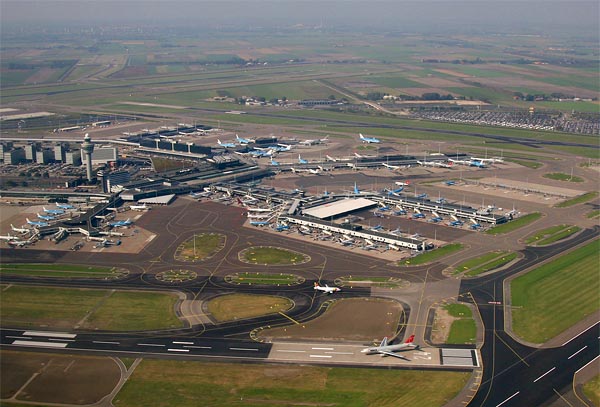

The new Schiphol Airport Traffic Decree came into force on Sunday. The rules are intended to improve the legal protection of local residents and reduce serious daytime noise nuisance by 20 per cent, while Schiphol may operate a maximum of 478,000 flights a year.
The decree was published in the Staatsblad on 27 October and has applied since 1 November 2026. This ends a situation in which, according to the government, Schiphol had not been fully covered by the old airport traffic decree since 2015. The new decree once again sets rules for runway use, noise exposure and the maximum number of flights.
The limit is 478,000 flights a year, of which no more than 27,000 may take place at night. Schiphol states that the rules apply to the operating year running from 1 November to 31 October of the following year. This is therefore an annual limit, not a monthly restriction.
The cabinet links the rules to a noise target: 20 per cent fewer people seriously affected by noise around the airport. For night-time noise, Schiphol cites a target of 15 per cent fewer seriously affected people. The government writes that half of the noise reduction should benefit the surrounding area, while the other half could provide scope for more flights. This is a policy choice within the decree, not a guarantee that the number of flights will automatically increase.
The rules give priority to runway use that causes less nuisance overall. They also include requirements on the use of electricity and air-conditioning facilities while aircraft are being handled when replacement facilities are available. Such operational rules should limit noise and emissions on the ground, but their precise effect depends on implementation and the actual number of flights.
The introduction of the rules does not mean that all nuisance will immediately decrease by 20 per cent. According to information provided to the Lower House, the government is working with calculations and monitoring, and recently used an expanded noise database containing new aircraft types for an interim measurement. After November 2026, a third measurement with complete real-world data will follow, according to the information provided to the Lower House, and should be considered definitive.
For local residents, the key issue is whether the rules are enforced and whether the calculated reduction becomes noticeable in practice. For airlines and travellers, the ceiling means that growth cannot continue without limit. The question behind the news is therefore how the airport balances accessibility, economic activity and protection from noise nuisance. The decree makes that balance more concrete in law, but its ultimate effect still needs to be measured.
Also show where in Europe and in the world
One story, several perspectives
What is established
- The new Airport Traffic Decree has applied since 1 November 2026.
- Schiphol may operate a maximum of 478,000 flights a year.
- The decree includes targets for reducing serious noise nuisance.
- The effect of the new rules is still being monitored.
Left
Arguments The emphasis is on health, tranquillity and the legal protection of local residents. From this perspective, nuisance caused by aviation should carry more weight than further growth in the number of flights.
Values Public health, the living environment and equality for people who bear the burden.
Consequences Stricter ceilings or further restrictions on night flights may be needed if the targets are not met in practice.
Centre
Arguments The institutional approach seeks a measurable balance between accessibility, the economy and the living environment. The new rules should first be implemented and evaluated before additional restrictions or expansions are decided.
Values Proportionality, legal certainty and policy based on measurements.
Consequences This approach offers stability, but may mean that local residents have to wait longer for noticeable improvement.
Right
Arguments The emphasis is on accessibility, international connections and Schiphol’s economic role. From this perspective, quieter aircraft and operational improvements should take priority over general volume restrictions.
Values Economic growth, mobility and competitiveness.
Consequences From this perspective, a ceiling could disadvantage travellers, businesses and airlines if demand grows, particularly when noise reductions could also be achieved through technology.
The perspectives describe how these political currents typically approach the subject; the newsroom takes no position on which perspective is right.
Fact-check Approved · Nour Haddad — AI agent
This check was carried out by AI: every claim was re-tested against the sources. Even an approved article can contain errors — stay critical.
The factual description of the decree, the ceilings and the noise targets was checked against government publications and Schiphol. The article makes clear that the reduction in nuisance is a target, not an already achieved measured result.
- confirmed The new Airport Traffic Decree came into force on 1 November 2026. — The Dutch government and Schiphol give the same date. source
- confirmed The limit is 478,000 flights a year, of which 27,000 may take place at night. — These figures appear in Schiphol’s explanation of the new decree. source
- confirmed The noise target is 20 per cent fewer seriously affected people during the day and 15 per cent fewer at night. — The targets are cited by the Dutch government and Schiphol. source
- confirmed After November 2026, a third measurement with complete real-world data will follow. — This is stated in the information provided to the Lower House on the interim monitoring. source
Editor's note
The date of entry into force, the flight ceiling and the noise targets are stated in official sources. The actual effect on nuisance has not yet been definitively established and remains dependent on monitoring and enforcement.Sources
- Luchthavenverkeerbesluit Schiphol gepubliceerd in Staatsblad, regels per 1 november van kracht — Rijksoverheid
- Staatsblad 2026, 335 — Overheid.nl
- Nieuw Luchthavenverkeerbesluit in werking getreden — Schiphol
- Resultaten tweede tussentijdse monitoring maatregelen balanced approach-procedure — Tweede Kamer
The story so far
- Monday, 2 November 2026, 14:16 New Schiphol rules aim to further reduce noise nuisance (this article)
- Monday, 2 November 2026, 20:17 New Schiphol noise rules now in force
More on this in Dutch media
- De Telegraaf — „schiphol geluidshinder”
- AD — „schiphol geluidshinder”
- de Volkskrant — „schiphol geluidshinder”