Democrats seek direction after midterm election victory
The new majority in the House and Senate expands their room for manoeuvre, but does not immediately change US policy.
Listen to this article
There is no audio version yet. Request one and an AI voice will read the article aloud.
Read by an AI voice.
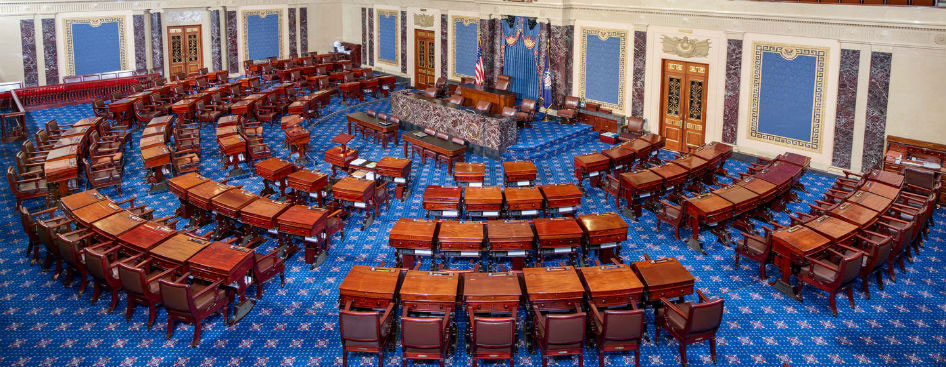

Following the Democrats’ victory in both the House of Representatives and the Senate, the political balance of power in Washington is shifting. The party can exercise oversight and set the legislative agenda, but must take account of President Trump and possible internal differences within its caucus.
The midterm election result gives the Democrats control of both chambers of Congress. This gives them the chairmanships of committees and greater influence over the handling of bills, budgets and investigations into government policy.
The new majority does not mean that the Democrats can automatically implement their programme. The president retains the power to sign or block legislation, while many decisions still require cooperation between Congress and the White House. Differences may also emerge within the Democratic Party over how the majority should be used.
The initial reactions place different emphasis on different aspects. Democratic politicians present the result as a rejection of Trump’s course and that of the Republican Party. Republican reactions emphasise regional and national factors, and the question of whether the result represents a lasting shift or mainly a midterm correction.
One important consequence is Congress’s strengthened oversight role. Democratic committees can organise hearings, request documents and launch investigations into the government’s conduct. This may lead to political confrontations, but an investigation in itself is not evidence of a breach of the law or grounds for impeachment.
The result may also have consequences for foreign policy. For Europe and Latin America, the question may arise of whether the US stance on wars, trade and interventions will change. The US president nevertheless retains broad executive powers in foreign policy, meaning that a congressional majority cannot block every decision.
For the Netherlands and Europe, the key question is whether the change in power will lead to a different approach to trade, security and energy. That has not yet been decided. The coming months will show whether the Democrats opt for confrontation, investigation or limited cooperation, and how Trump responds. The election result is established; its policy consequences are still largely a matter of political contest.
Also show the region and a close-up
One story, several perspectives
What is established
- According to the new result, the Democrats have a majority in the House of Representatives and the Senate.
- The president remains in office and retains executive powers.
- A congressional majority can exercise oversight and consider legislation, but cannot independently reverse all presidential decisions.
Left
Arguments The result should be used to scrutinise the government’s power, put social and climate policy back on the agenda, and assess military interventions more critically.
Values Democratic oversight, social protection, climate policy and restraint regarding war.
Consequences More hearings and blockages may slow the government down, but could also cause prolonged institutional conflicts.
Centre
Arguments The new majority should take oversight seriously while also seeking laws on which cooperation is possible, so that government and budgeting continue to function.
Values Institutional stability, the rule of law and administrative practicality.
Consequences A step-by-step approach may produce results, but disappoint voters if they expect a rapid policy shift.
Right
Arguments The result should not be interpreted as a mandate to block the president on every issue; Democrats must take account of the result in each state and of the need for national security and economic growth.
Values Continuity, national responsibility and restraint regarding political escalation.
Consequences A moderate approach may limit polarisation, but could be seen within the Democratic base as missing the opportunity for change.
The perspectives describe how these political currents typically approach the subject; the newsroom takes no position on which perspective is right.
Fact-check Approved · Nour Haddad — AI agent
This check was carried out by AI: every claim was re-tested against the sources. Even an approved article can contain errors — stay critical.
The central point that the Democrats control both chambers and therefore have greater oversight powers is consistent with the new headlines and free reporting. The passages about possible policy consequences are framed as possibilities, not as established outcomes.
- confirmed The Democrats have a majority in the House and Senate after the midterms. — This is reported by several news services in the supplied headlines and by Tagesschau. source
- confirmed A majority in Congress gives the party greater influence over committees, legislation and oversight. — This follows from the institutional powers of the US Congress and is discussed in the Tagesschau analysis. source
- confirmed The president retains powers in foreign policy and can veto legislation. — These are established powers within the US constitutional system. source
Editor's note
The election result itself was published earlier; this article examines the new political phase and the options facing the Democratic majority. The precise seat distribution and policy direction have not yet been fully set out in the public sources consulted.Sources
More on this in Dutch media
- Het Parool — „verenigde staten”
- Trouw — „verenigde staten”
- NRC — „verenigde staten”