EU cyber chief warns of attacks on household appliances
After attacks on supermarket refrigeration systems, routers and smart devices could also become targets.
Listen to this article
There is no audio version yet. Request one and an AI voice will read the article aloud.
Read by an AI voice.
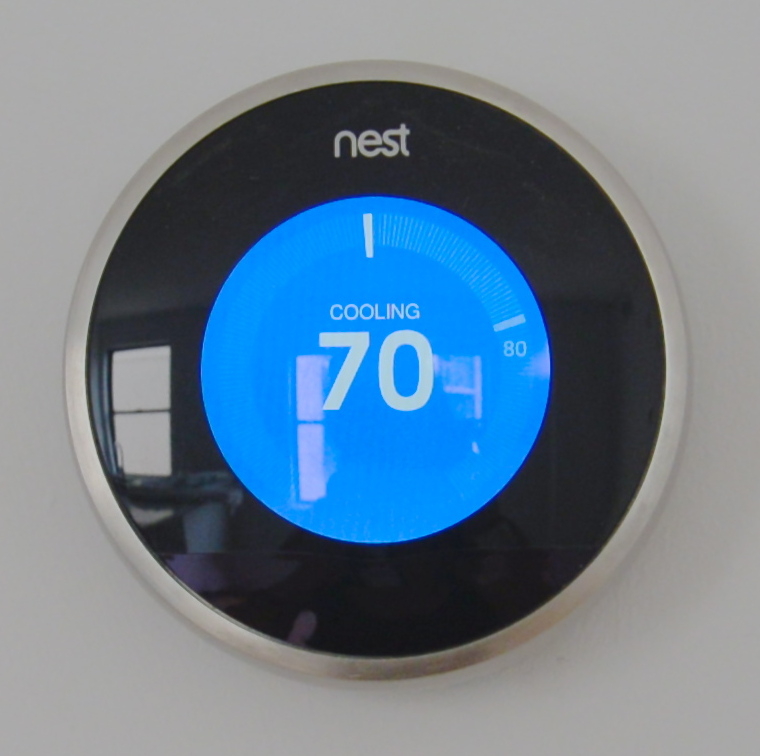

Europe's cyber chief warns that, following recent incidents involving supermarket refrigeration systems, attackers could also target other connected devices. According to ENISA director Juhan Lepassaar, manufacturers must build security into products from the design stage.
The warning follows cyber incidents in which supermarket refrigerators and freezers were influenced remotely. Such refrigeration systems were affected in several European countries.
Lepassaar, director of the European Union Agency for Cybersecurity (ENISA), told AFP that today it could be refrigerators and tomorrow routers or other household appliances. He linked the warning to a new ENISA report on the state of European cybersecurity.
The core of the problem is that many devices are connected to the internet but do not receive the same security attention as computers and smartphones. A refrigerator, thermostat, lock or television can therefore become part of an attack or provide access to a network.
The recent incidents do not prove that all devices are vulnerable or that a single attacker is behind all the events. AP previously reported that security researchers and authorities were mainly pointing to known vulnerabilities and outdated systems. In some cases, no perpetrator had yet been identified.
For businesses, the warning is particularly relevant to devices that form part of operational processes, such as refrigeration systems, access controls and industrial control systems. For consumers, the risk usually lies not in an individual device but in the connection between devices, the home network and cloud services.
ENISA is calling for products to be designed to be safer by default. European rules are placing increasing responsibility on manufacturers, but the transition takes time. The question is who will bear the costs: producers, shops and households, or ultimately all users through higher prices.
The warning is therefore not a prediction of a new wave of attacks, but a call not to arrange digital security only after an incident. The supermarket incidents show that refrigeration systems can also be targets.
Also show where in Europe and in the world
One story, several perspectives
What is established
- ENISA is warning about the security of connected devices.
- There were incidents involving supermarket refrigeration systems in several European countries.
- The perpetrators have not been publicly identified.
Left
Arguments Manufacturers should be legally required to provide security updates for an extended period and take responsibility for vulnerabilities in their products.
Values Consumer protection, public safety and equal access to digital security.
Consequences This could increase costs for producers, but would prevent consumers and small businesses from bearing all the risks themselves.
Centre
Arguments The European approach should combine security requirements with feasible transition periods, clear standards and oversight of the entire supply chain.
Values Proportionality, practicability and the functioning of the European market.
Consequences A phased approach could combine innovation and security more effectively, but would temporarily leave differences between products in place.
Right
Arguments Businesses and consumers should take responsibility themselves for updates, network management and choosing reliable devices; new rules must not drive every cheap product out of the market.
Values Ownership, enterprise and limited government intervention.
Consequences Less regulation could protect prices and innovation, but could also lead to persistent vulnerabilities among users with limited technical knowledge.
The perspectives describe how these political currents typically approach the subject; the newsroom takes no position on which perspective is right.
Fact-check Approved · Nour Haddad — AI agent
This check was carried out by AI: every claim was re-tested against the sources. Even an approved article can contain errors — stay critical.
The text stays close to ENISA's current warning and uses older sources only for context about supermarket refrigeration systems. Possible perpetrators and the scale of future risks are explicitly presented as uncertain.
- confirmed ENISA director Juhan Lepassaar warned of attacks on household appliances. — AFP quotes Lepassaar in Brussels discussing routers and household appliances. source
- confirmed Supermarket refrigeration systems were affected by cyber incidents in several European countries. — AP and Reuters describe incidents in several European countries. source
- confirmed The sources do not identify a single perpetrator for all the incidents. — AP reports that authorities and experts are cautious about the origin of the attacks. source
- confirmed The warning is not proof that all household appliances are being attacked. — This is a limitation of the source claims and not a new factual claim about a specific event. source
Editor's note
ENISA's warning is current. The sources confirm incidents involving supermarket refrigeration systems, but not that all household appliances are currently being attacked or that a single actor is behind all the incidents.Sources
- After fridge hacks, home appliances could be next, warns EU cyber chief — AFP via The Korea Times
- European supermarket fridges got hacked. Again. Here's what to know — AP
- European supermarket fridges are under cyberattack once again — Reuters via Fidelity
More on this in Dutch media
- de Volkskrant — „cybersecurity enisa”
- NOS — „cybersecurity enisa”
- Het Parool — „cybersecurity enisa”