Potatoes grown in simulated lunar soil
Researchers at Oregon State University initiated a complete potato growth cycle using organic material in lunar-soil simulants.
Listen to this article
There is no audio version yet. Request one and an AI voice will read the article aloud.
Read by an AI voice.
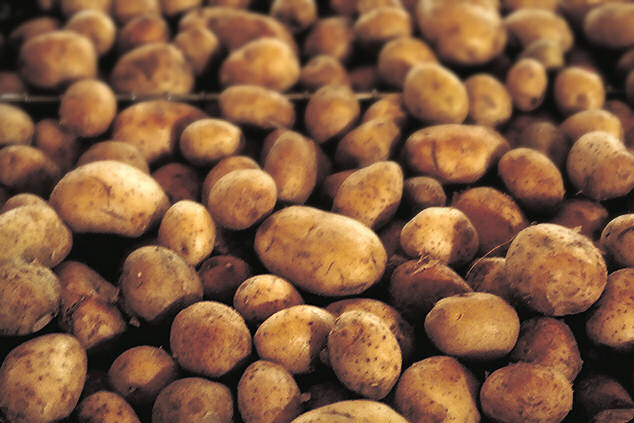

Researchers have grown potatoes in simulated lunar soil supplemented with worm compost. The plants grew and developed similarly to potatoes in ordinary soil, but the experiment took place under Earth conditions and does not yet prove that farming on the Moon is feasible.
The study was published in the peer-reviewed journal npj Microgravity. The Oregon State University team examined five regolith simulants, representing the loose rock and dust on the Moon’s surface. The simulants represented both lunar maria and highlands.
Without organic matter, the plants grew poorly: they remained small and developed underdeveloped roots. In a mixture containing 30 per cent vermicompost, compost made with the help of worms, growth and development matched those of plants in Earth soil.
The researchers chose potatoes because the tuber can provide relatively many calories per area and is considered a practical crop for long-duration space missions. In the experiment, the plants completed their entire life cycle in the simulant, including the formation of potatoes.
The researchers also report that nutritional quality was preserved. There was no statistically significant increase in glycoalkaloids, natural substances in potatoes that can be toxic at high concentrations. That result applies to these experimental conditions and not to potatoes actually grown on the Moon.
The results show that potatoes can grow in lunar-soil simulants with added organic matter. This does not establish how well such a mixture would work on the Moon, or how sufficient organic material could become available there.
The study shows what is possible under terrestrial experimental conditions; whether it would also work on the Moon remains uncertain. The plants were kept in small pots and under Earth’s gravity and protection. A follow-up study must compare ten potato varieties. Questions about radiation, low gravity, water, energy and the availability of organic raw materials also remain unanswered.
Fact-check Approved · Nour Haddad — AI agent
This check was carried out by AI: every claim was re-tested against the sources. Even an approved article can contain errors — stay critical.
The study and its main results can be found in the publication and an independent science report. The limitations of the laboratory experiment are explicitly included.
- confirmed Potatoes were able to complete their entire life cycle in lunar-soil simulants with added organic matter. — Phys.org summarises the Oregon State University study. source
- confirmed A mixture containing 30 per cent vermicompost produced growth comparable to that in Earth soil. — The study describes the results in these terms. source
- confirmed The experiment took place under Earth conditions and not on the Moon. — The source describes simulants and laboratory cultivation; scinexx explicitly mentions Earth’s gravity and protected conditions. source
Editor's note
The results come from peer-reviewed research published on 19 November. The study involved lunar-soil simulants in a laboratory; actual lunar soil, lunar radiation and low gravity were not tested.Sources
- Potatoes grown in simulated lunar soil match Earth-grown performance — Phys.org / Oregon State University
- Growth and molecular responses of potato to lunar regolith simulants — npj Microgravity / Nature
- Kartoffeln wachsen in Mondstaub und echter Erde gleich gut — scinexx
More on this in Dutch media
- NU.nl — „aardappels maan”
- De Telegraaf — „aardappels maan”
- AD — „aardappels maan”