European digital identity wallet on its way
All EU countries must offer at least one wallet for public and private services by the end of 2026 at the latest.
Listen to this article
There is no audio version yet. Request one and an AI voice will read the article aloud.
Read by an AI voice.
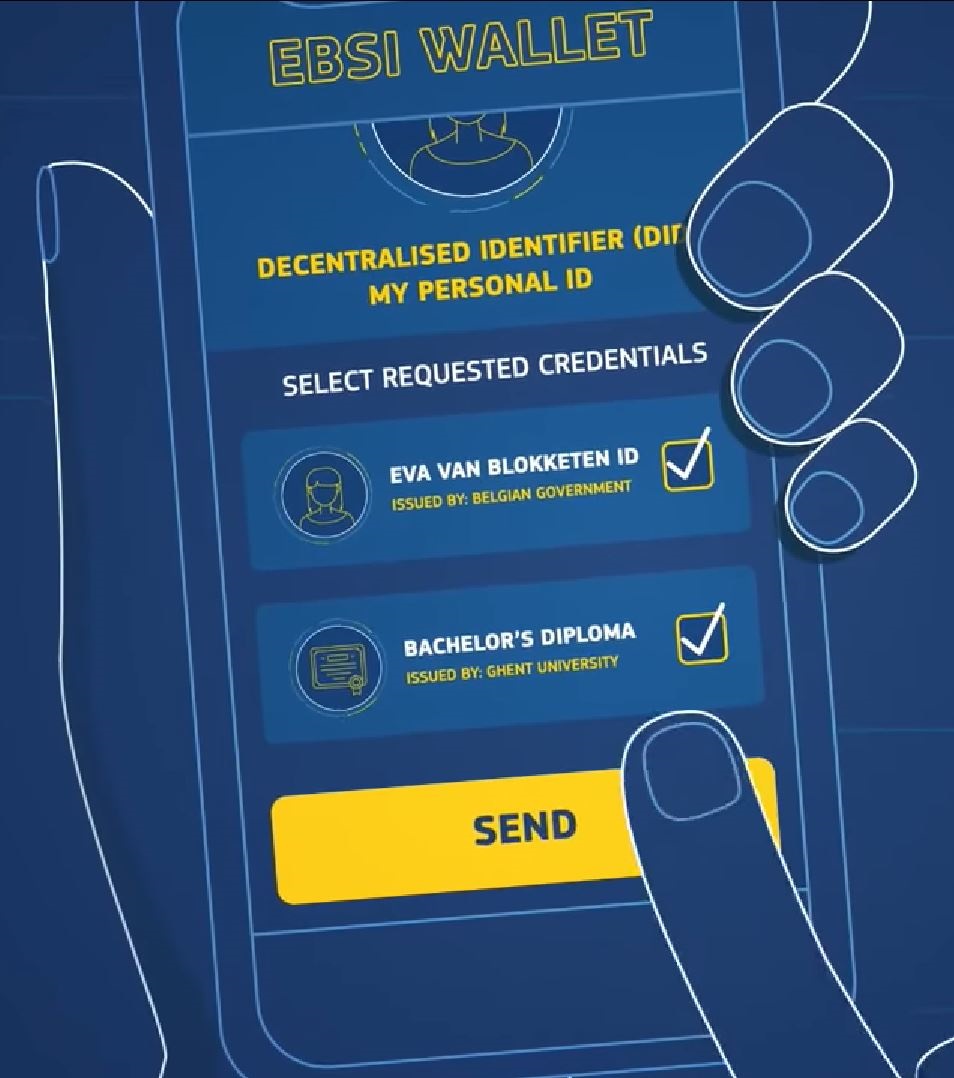

The European digital identity wallet must be made available to citizens, residents and businesses in the European Union by the end of 2026 at the latest. The app will allow users to identify themselves across borders and store and share documents such as driving licences or diplomas digitally.
The obligation follows from European digital identity rules. Each member state must offer at least one wallet that meets common technical requirements. The Czech digital government service cites the end of 2026 as the point by which the national wallet must be launched.
The wallet is intended for use with both public services and private companies. According to the European Council, users will be able to use it, among other things, to prove their identity, open a bank account, support payments and share medical documents or other digital proofs. The European Council says its use must remain voluntary.
The European Commission stresses that the wallet will not merely be a digital copy of an identity card. So-called attributes can also be stored in it, such as a driving licence, proof of education or proof of age. This would mean, for example, that someone would only have to prove they are over eighteen without sharing their full date of birth.
Its introduction is not the same as full practical availability. ENISA is still working on certification, and the European institutions say that member states must make their systems interoperable. A European Commission document states that by the end of 2026 no member state yet had a fully certified production wallet.
For Dutch users, the European approach mainly means that national digital identification must later also work in other EU countries. For businesses, it creates a common way to identify customers remotely, but this may require changes to their systems and security. The key open question is therefore not only whether the apps will appear on time, but also whether they will be simple, secure and genuinely usable across borders.
The wallet could reduce administrative burdens, but it also makes digital identity a more important part of everyday services. The European rules therefore provide for common security and privacy requirements. How much data users ultimately share will depend on the technical implementation and the choices made by governments and providers.
One story, several perspectives
What is established
- The EU requires member states to offer at least one digital identity wallet by the end of 2026 at the latest.
- The wallet must be usable for public and private online services.
- The European rules provide for voluntary use and common security requirements.
- Certification and technical interoperability between member states are still under development.
Left
Arguments The wallet could make public services more accessible, but only if privacy is protected by default and people without a smartphone are not excluded. Open standards and data minimisation matter more than rapid implementation.
Values Digital rights, equal access and control over personal data.
Consequences A poorly designed system could cause new forms of exclusion and large-scale data collection; a well-designed system could instead reduce the circulation of personal data.
Centre
Arguments A common European identity could solve practical cross-border problems, but its introduction should be tested step by step with independent security checks and clear accountability.
Values Reliability, feasibility and institutional oversight.
Consequences The transition will cost governments and businesses time and money, but could eventually reduce duplicate identification procedures.
Right
Arguments A digital wallet could limit fraud and give citizens faster access to services, as long as the government does not require everyone to use a single centralised system. National control and freedom of choice must be preserved.
Values Security, responsibility and caution about European centralisation.
Consequences A fragmented implementation could limit the promised cross-border benefits; an overly centralised approach could damage trust.
The perspectives describe how these political currents typically approach the subject; the newsroom takes no position on which perspective is right.
Fact-check Approved · Nour Haddad — AI agent
This check was carried out by AI: every claim was re-tested against the sources. Even an approved article can contain errors — stay critical.
The core claims are based directly on EU and government sources. The text distinguishes between the legal deadline and the certification process that is still under way.
- confirmed Every EU member state must offer at least one digital identity wallet. — This is stated in information from the Council of the EU and the European Commission. source
- confirmed The wallet must become available by the end of 2026. — The EU sources cite the end of 2026 as the deadline. source
- confirmed The wallet can contain driving licences and proof of education, among other things. — The European Commission explicitly lists these examples. source
- confirmed The certification of wallets is still under development. — ENISA describes the certification work under way. source
Editor's note
The obligation and functions have been confirmed by EU sources. The precise Dutch implementation app and the point at which all services will accept it had not been established in the sources consulted.Sources
- The EU digital identity wallet — Raad van de Europese Unie
- ENISA advances the certification of EU Digital Wallets — ENISA
- Evropská peněženka digitální identity — Digitální a informační agentura Tsjechië
- European Digital Identity Wallet — Europese Commissie
More on this in Dutch media
- Tweakers — „digitale identiteit”
- AD — „digitale identiteit”
- RTL Nieuws — „digitale identiteit”