National protocol for crack medication due by early 2027
A parliamentary majority wants the ADHD medicine lisdexamfetamine to be made available quickly to selected crack addicts.
Listen to this article
There is no audio version yet. Request one and an AI voice will read the article aloud.
Read by an AI voice.
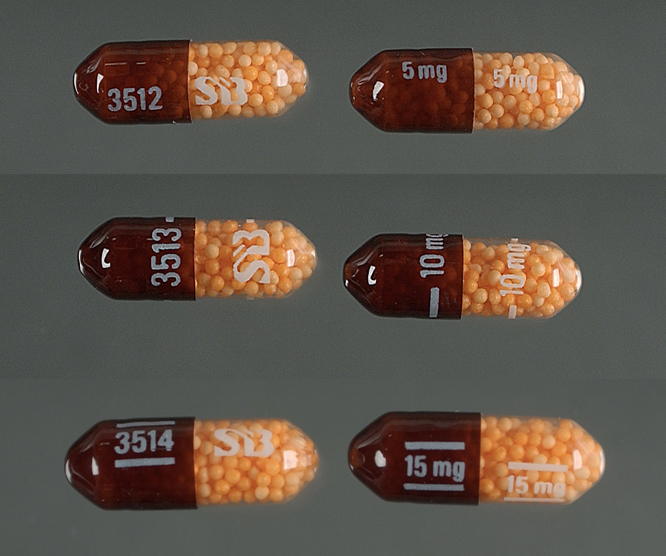

A majority in the Lower House wants doctors to be able to use lisdexamfetamine at short notice in treating crack addiction. Minister Sophie Hermans is working with the National Rapporteur on Addiction and Verslavingskunde Nederland on a national protocol, which is due to be ready by early 2027.
According to NOS, the Lower House spoke to Hermans on Thursday about drug prevention and addiction care. The broadcaster said the motion was initiated by Pro and received support from D66, JA21, SP, Volt, Partij voor de Dieren and CDA. NOS describes it as a drug related to dexamfetamine that is used, among other things, to treat ADHD.
The Lower House wants treatment of crack addiction with lisdexamfetamine to be made possible. The idea is that the drug could reduce the strong craving for crack, giving patients more scope for further treatment. The Lower House does not want unrestricted distribution: even among supporters of the proposal, there is a demand that medication should form part of broader care.
An earlier Dutch trial involving dexamfetamine was halted after the Health and Youth Care Inspectorate stopped production of the drug. The inspectorate gave no substantive reason for this; a supervisory procedure was under way concerning the production of medicines by an involved hospital. Halting a trial may also delay research into its effectiveness.
Pressure on municipalities is meanwhile increasing. Nieuwsuur reported on Thursday that problems involving crack use are no longer confined to Amsterdam and Rotterdam, but are also occurring in Groningen, Arnhem, Breda and Enschede, among other places. According to the Trimbos Institute, around 28,000 people in the Netherlands use crack, compared with an estimated 12,000 three years ago.
Municipalities say that police deployment and assertive outreach work do not solve the problem on their own. The G40 is calling for national coordination and an additional €100 million a year for care and shelter. According to municipalities, crack addiction is often accompanied by homelessness and mental health problems, meaning that medication alone cannot provide a complete solution.
The precise conditions of the new protocol are not yet known. Nor has it been established when doctors can actually begin prescribing. The Lower House is calling for speed, but the minister stresses that the assessment of new treatments belongs with experts. Political support does not yet mean that medical effectiveness has been proven.
Also show where in Europe and in the world
One story, several perspectives
What is established
- Doctors are currently not allowed to prescribe lisdexamfetamine for crack addiction.
- A parliamentary majority wants to make this possible at short notice.
- A national protocol is being prepared by the National Rapporteur on Addiction and Verslavingskunde Nederland.
- An earlier trial involving dexamfetamine was halted after intervention by the Health and Youth Care Inspectorate.
Left
Arguments The government must quickly provide accessible, integrated care and medication for a group that often currently falls between addiction services, shelters and the police.
Values Equal access to care, public health and protecting people in vulnerable situations.
Consequences Rapid implementation could ease pressure on the streets and on municipalities, but would also require investment in housing, mental health care and support.
Centre
Arguments A protocol could provide a controlled route, but prescribing should be linked to expert assessment, monitoring and broader treatment.
Values Medical diligence, feasibility and institutional responsibility.
Consequences A phased approach would prevent indiscriminate distribution, but could mean that patients and municipalities have to wait longer for clarity.
Right
Arguments The government should be cautious about making a stimulant available to people with a severe addiction and should primarily set limits on nuisance and drug use.
Values Public order, individual responsibility and protecting society.
Consequences A stricter approach could visibly limit nuisance, but without sufficient care the problems could shift elsewhere or become more serious.
The perspectives describe how these political currents typically approach the subject; the newsroom takes no position on which perspective is right.
Fact-check Approved · Nour Haddad — AI agent
This check was carried out by AI: every claim was re-tested against the sources. Even an approved article can contain errors — stay critical.
The article's central point is based on current NOS reporting about the parliamentary debate and the minister's response. The text clearly distinguishes between political support, a future protocol and medical effectiveness that has not yet been proven.
- confirmed A parliamentary majority wants to use lisdexamfetamine against crack addiction. — NOS reports the parliamentary initiative and support from several factions. source
- confirmed The national protocol must be ready by early 2027. — NOS writes that the guideline must be ready early next year. source
- confirmed An earlier trial involving dexamfetamine was halted by the Health and Youth Care Inspectorate. — NOS describes the halt to production and the supervisory procedure. source
- confirmed Around 28,000 people use crack in the Netherlands. — Nieuwsuur refers to figures from the Trimbos Institute for this. source
Editor's note
It is established that a parliamentary majority wants lisdexamfetamine to be made available more quickly and that a national protocol is being prepared. The precise date on which the protocol will appear and the conditions for prescribing are not yet known; that is why 'early 2027' has been used rather than April as an established fact.Sources
- Kamer wil ADHD-medicijn inzetten tegen crack-verslaving — NOS
- Ook buiten de grote steden groeit het crackprobleem — NOS Nieuwsuur
- Amsterdamse proef met medicijn voor crackverslaafden stilgelegd na ingrijpen inspectie — NOS
- Amsterdam vraagt minister om hulp na stopzetten onderzoek nieuwe behandeling crackverslaving — Gemeente Amsterdam
More on this in Dutch media
- Het Parool — „crackverslaving verslavingszorg”
- Trouw — „crackverslaving verslavingszorg”
- NRC — „crackverslaving verslavingszorg”