New rules give drones more room around airports
New zones around Schiphol and four other civil airports apply from Thursday, with continued bans on the open category in the strictest zones.
Listen to this article
There is no audio version yet. Request one and an AI voice will read the article aloud.
Read by an AI voice.
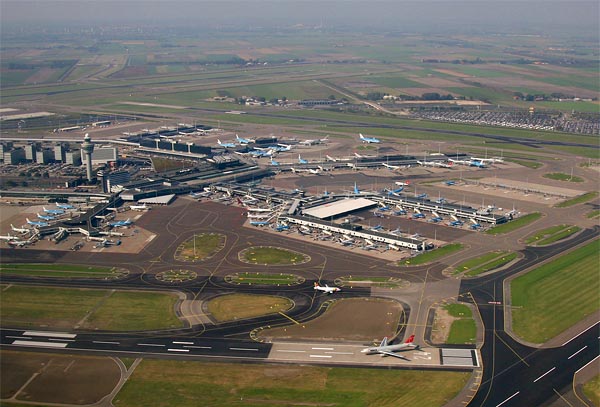

The Netherlands has changed the classification of its airspace for drones around five civil airports. This creates more room for flights in some outer zones, while stricter bans around the airports remain in place.
The change has applied since 26 November to the civil control areas around Schiphol, Lelystad, Groningen Airport Eelde, Maastricht Aachen Airport and Rotterdam The Hague Airport. These areas are divided into various geographical zones.
Flying in the open category remains prohibited in zones 1, 2A and 2B. In other areas, certain drone flights may be permitted, depending on the zone, the flight category and the safety conditions. The rules therefore do not constitute general permission to fly around airports.
The new regulation replaces the previous broad ban on flights by unmanned aircraft in civil and military control areas. Under the regulation, a ban on the open category remains in place for military control areas. The regulation also contains bans for parts of foreign control areas above Dutch territory.
The Rijksoverheid says the change is intended to organise the airspace more intelligently and enable safe drone use. According to the Rijksoverheid, the new zones should distinguish between areas where direct protection of manned air traffic is needed and areas where controlled access is possible.
The regulation covers recreational, professional and inspection flights, among others, but the precise possibilities depend on the drone, the flight category, the distance from obstacles and the location. Aviation rules and any obligations concerning registration, training and operational safety remain in force.
The change may create opportunities for drone companies, inspection firms and professional users wishing to fly around airports. For local residents and recreational pilots, not everything changes everywhere: flying in the open category remains prohibited in the strictest zones. The official map and the conditions for each zone are therefore decisive for every individual flight.
Also show where in Europe and in the world
One story, several perspectives
What is established
- From 26 November, civil control areas around five airports have been classified differently.
- Flying in the open category remains prohibited in several zones.
- Controlled drone use may become possible in some outer zones.
- The regulation is aimed at the safety of manned and unmanned air traffic.
Left
Arguments More controlled space can support public applications such as inspections, emergency services and nature monitoring, provided safety and privacy are robustly safeguarded.
Values The public interest, innovation with social value, accessibility and the protection of local residents are central.
Consequences Careful expansion can make useful services cheaper, but insufficient oversight could increase risks to privacy and the living environment.
Centre
Arguments The zoning is an institutional attempt to replace an absolute ban with risk-based rules for each area and flight category.
Values Proportionality, enforceability and aviation safety are the main principles.
Consequences The regulation may enable innovation without abandoning the strictest safety zones, but it requires clear maps and enforcement.
Right
Arguments The safety of manned air traffic and the pilot’s responsibility must carry more weight than the rapid growth of commercial drone flights.
Values Order, property and safety rights, and individual responsibility come first.
Consequences Strict restrictions can prevent incidents, but too little room could leave Dutch companies and public services at a disadvantage.
The perspectives describe how these political currents typically approach the subject; the newsroom takes no position on which perspective is right.
Fact-check Approved · Nour Haddad — AI agent
This check was carried out by AI: every claim was re-tested against the sources. Even an approved article can contain errors — stay critical.
The legal change, date and airports involved are based on the Staatscourant and the Rijksoverheid. The article makes clear that the expansion is limited and does not constitute a general exemption.
- confirmed The new regulation entered into force on 26 November 2026. — Article IV of the Staatscourant gives this date. source
- confirmed The civil CTRs around five Dutch airports have been divided into zones. — The regulation names Schiphol, Lelystad, Eelde, Maastricht and Rotterdam. source
- confirmed Flying in the open category is prohibited in zones 1, 2A and 2B. — This is stated in Article 3a of the regulation. source
- confirmed The change does not mean that drones may fly everywhere around airports. — The regulation contains continuing bans and zone conditions; the Rijksoverheid describes the expansion as limited. source
Editor's note
The entry into force and zone classification are set out in the Staatscourant. The precise flight permitted depends on the location and flight category, according to the official map and conditions; ‘drones are legal everywhere’ would be incorrect.Sources
More on this in Dutch media
- NU.nl — „drones luchtvaart”
- De Telegraaf — „drones luchtvaart”
- de Volkskrant — „drones luchtvaart”