Research points to violence at early Egyptian graves
A reanalysis of ancient skulls cautiously supports the theory that some courtiers were buried with their king.
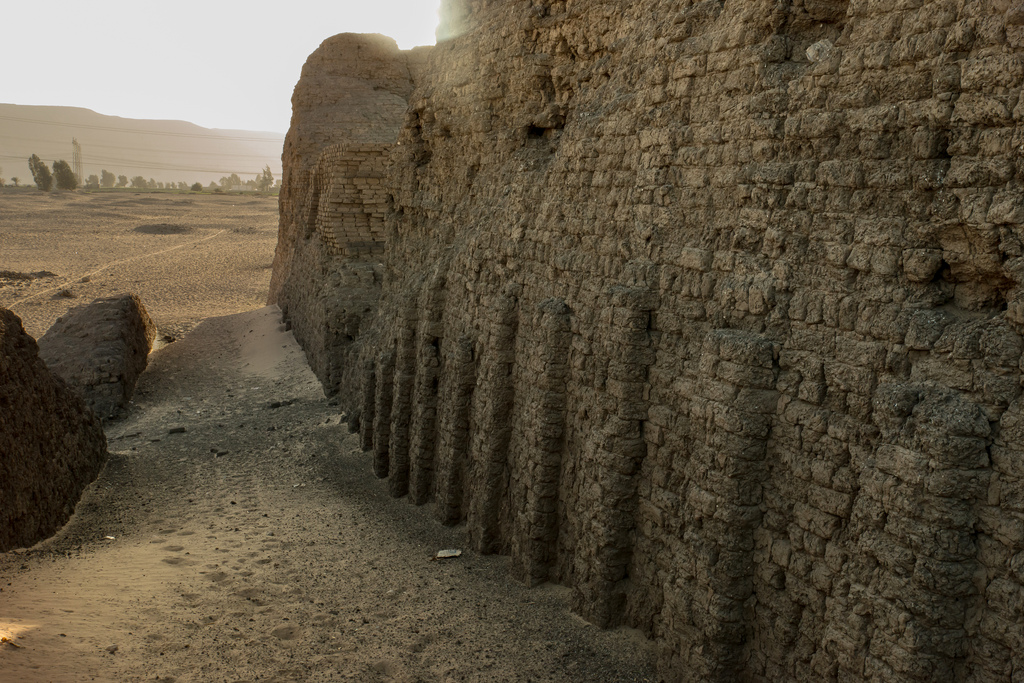

A new study lends further support to the idea that some people near the first Egyptian kings did not die naturally. Researchers stress that the remains form a limited and incomplete collection.
The study examines graves around the royal funerary complexes of Abydos, where the kings of the first dynasties of a unified Egypt were buried. Archaeologists found dozens to hundreds of smaller graves around royal tombs there. In the past, these were interpreted as possible graves of courtiers who were meant to accompany their king into the afterlife.
The British Egyptologist Flinders Petrie examined some of the graves in the 1920s. He suspected that the simultaneous construction and sealing of many graves could point to a form of retainer sacrifice: the killing of members of the court following a ruler’s death. At the time, hard evidence for the cause of death was lacking.
Archaeologist Roselyn Campbell of Purdue University re-examined 46 skulls from the earlier excavations. In 18 of them, she found traces that, in her view, are consistent with violence around the time of death. The results were published in Frontiers in Environmental Archaeology; this is a new research paper, not a replication by a second research group.
The findings do not prove that everyone in the surrounding graves was sacrificed. Many remains have not survived or are no longer in their original location. Nor can the researchers establish whether those involved went willingly, were selected or were forced.
The study mainly changes the strength of the evidence. Whereas the theory previously relied chiefly on the arrangement and timing of the graves, bioarchaeological information has now been added. At the same time, the interpretation remains dependent on a small sample and on how representative the preserved skulls are of all those buried.
The researchers therefore describe the outcome as evidence of an early use of retainer sacrifice, not as a definitive answer to its social and religious significance. The research also shows how old collections can raise new questions through modern methods, without resolving every detail of the past.
Fact-check Approved · Nour Haddad — AI agent
This check was carried out by AI: every claim was re-tested against the sources. Even an approved article can contain errors — stay critical.
The numbers, researcher, site and publication status can be found in the press release and science reporting. The text limits the conclusion to indications and explicitly mentions the dataset’s limitations.
- confirmed The study analysed 46 preserved skulls and found indications of violence around the time of death in 18 of them. — Science Media Centre and ScienceAlert refer to the same study and numbers. source
- confirmed The graves lie around royal complexes in Abydos dating from the first dynasties. — Science Media Centre describes the site and dating. source
- confirmed The research was published in Frontiers in Environmental Archaeology. — Frontiers DOI and the scientific press release. source
- confirmed The findings do not prove that everyone in the surrounding graves was sacrificed. — The researchers describe the dataset as incomplete and leave alternative explanations open. source
Editor's note
The research was published in a scientific journal and supports the hypothesis of violence in some of the burials. The sample is small, many remains are missing, and willingness or coercion cannot be established.Sources
- Modern forensic methods reveal human sacrifice in Ancient Egypt after rulers’ deaths — Science Media Centre Australia
- Egypt’s First Kings May Not Have Entered The Afterlife Alone — ScienceAlert
- Modern forensic methods reveal human sacrifice in ancient Egypt — Frontiers in Environmental Archaeology
More on this in Dutch media
- Het Parool — „oude egypte”
- Trouw — „oude egypte”
- NRC — „oude egypte”