Navi Pillay awarded Nobel Peace Prize
The South African lawyer is honoured for her efforts on behalf of international rule of law and holding those in power to account.
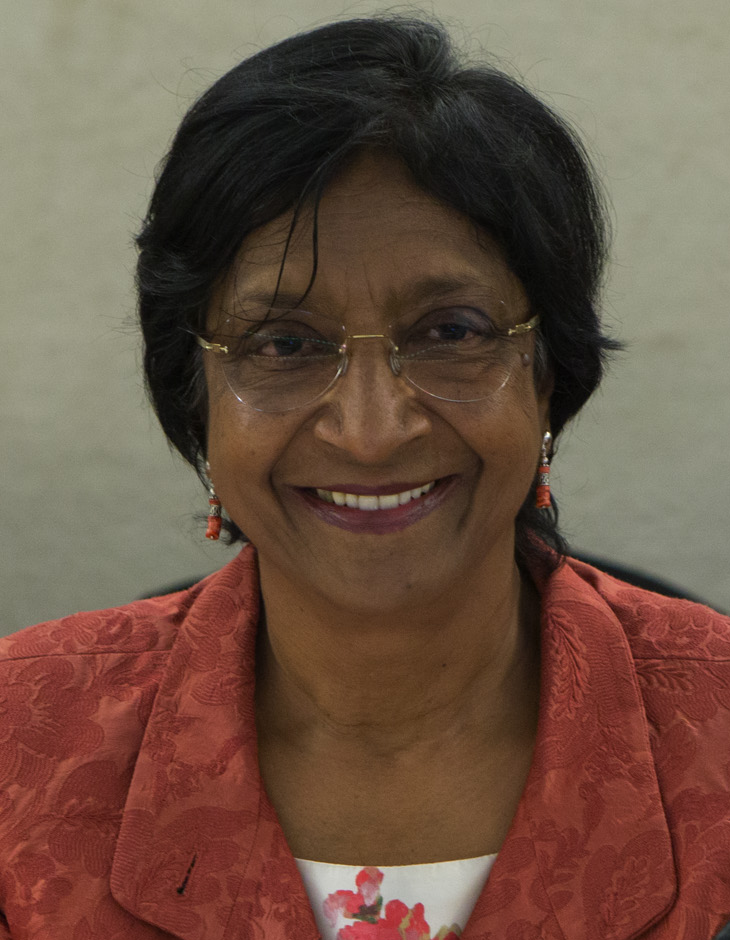

Former UN human rights chief Navanethem “Navi” Pillay has been awarded the 2026 Nobel Peace Prize. The Norwegian Nobel Committee says that through her work she has strengthened the international rule of law and the fight against impunity.
Pillay was announced as the laureate in Oslo on Friday. According to the committee, her career embodies the idea that war crimes, crimes against humanity and genocide must not remain beyond the reach of the courts. The committee also linked the award to the pressure being placed worldwide on international institutions and judges.
The South African lawyer was born in Durban in 1941, during apartheid. According to her official biography, in 1967 she became the first black woman to set up her own legal practice in Natal province. She later became the first black woman on South Africa’s Supreme Court.
Pillay was a judge at the International Criminal Tribunal for Rwanda and subsequently served as a judge at the International Criminal Court. From 2008 to 2014, she was United Nations High Commissioner for Human Rights. In those roles, she worked on international criminal cases and human rights, including sexual violence in conflicts.
The Nobel Prize is therefore not only a personal distinction, but also a signal about the role of international justice. The committee says that peaceful conflict resolution depends on institutions that can investigate facts and hold those responsible legally to account. That principle comes under pressure when states reject rulings or attack judges politically.
The award also raises questions about the limits of symbolic recognition. A Nobel Prize can bring attention and legitimacy, but does not automatically change states’ willingness to extradite suspects or implement rulings. Pillay’s earlier work on international conflicts has also been the subject of political criticism, particularly when governments involved felt challenged by human rights investigations.
The Nobel Committee announced that it had initially been unable to reach Pillay to deliver the news personally. The ceremony is scheduled for December in Oslo. The award comes at a time when the international rule of law is central to discussions about wars, prosecutions and the protection of civilians.
One story, several perspectives
What is established
- Pillay has been awarded the 2026 Nobel Peace Prize.
- She held positions at the UN, the Rwanda tribunal and the ICC.
- The Nobel Committee links the award to the international rule of law and accountability.
Left
Arguments The award confirms that human rights and the protection of victims are an international responsibility. International judges must be able to work independently, even when powerful states resist.
Values Equality, human rights and the protection of vulnerable groups.
Consequences Greater support for international prosecutions may give victims recognition, but may also increase diplomatic tensions.
Centre
Arguments The award highlights the institutional approach: investigation, evidence, treaties and independent justice. International institutions must at the same time remain transparent and procedurally rigorous.
Values The rule of law, multilateralism and proportionality.
Consequences That requires long-term cooperation and may produce results less quickly than political statements or sanctions.
Right
Arguments A critical reading warns that international institutions must not be placed above political accountability. States must safeguard their own legal orders and prevent international tribunals from being used selectively.
Values National sovereignty, democratic oversight and the equal application of rules.
Consequences Greater restraint towards international justice may protect national decision-making, but may also make prosecutions more difficult when states themselves fail to act.
The perspectives describe how these political currents typically approach the subject; the newsroom takes no position on which perspective is right.
Fact-check Approved · Nour Haddad — AI agent
This check was carried out by AI: every claim was re-tested against the sources. Even an approved article can contain errors — stay critical.
The core facts about the award, Pillay’s career and her positions were checked against AP, the UN and the ICC. The text clearly distinguishes between the committee’s citation and possible political consequences.
- confirmed Navi Pillay won the 2026 Nobel Peace Prize. — Associated Press reported on the announcement in Oslo. source
- confirmed Pillay was UN High Commissioner for Human Rights from 2008 to 2014. — This is stated in publicly available biographical profiles of Pillay. source
- confirmed Pillay was a judge at the International Criminal Court and at the Rwanda tribunal. — The ICC describes her positions and career. source
- confirmed The Nobel Committee referred to the international rule of law and the prosecution of serious crimes. — The citation is reproduced in the AP report on the announcement. source
Editor's note
The award and its citation have been confirmed by AP and official UN and ICC profiles. The political consequences of the award are analysis, not an established effect.Sources
- Navanethem ‘Navi’ Pillay wins the Nobel Peace Prize for her work in international justice — Associated Press
- Judge Navanethem Pillay — International Criminal Court
- Navanethem Pillay — United Nations
More on this in Dutch media
- NRC — „navi pillay”
- NU.nl — „navi pillay”
- De Telegraaf — „navi pillay”